
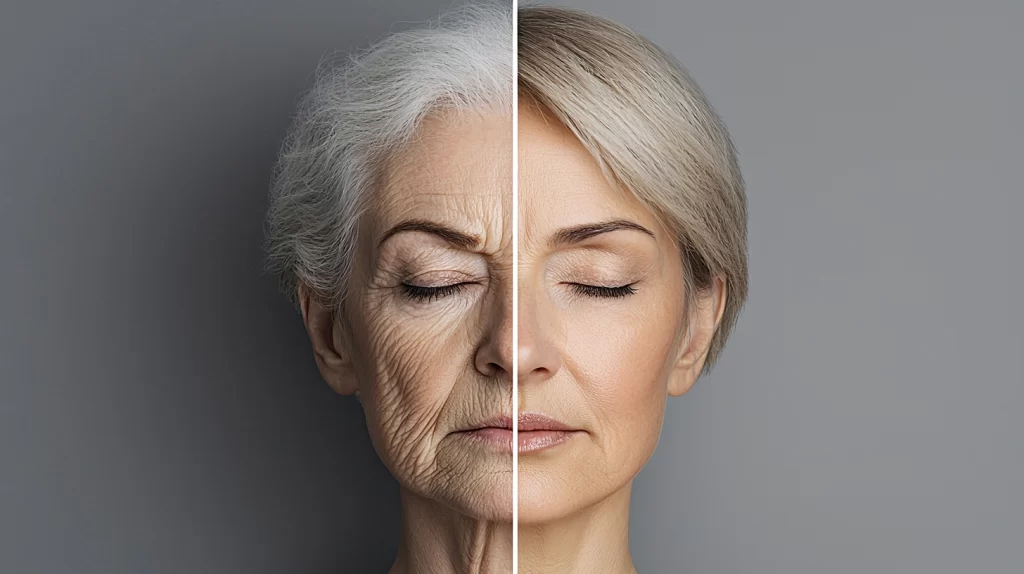
When we look in the mirror, what we see is not always merely a wrinkle. Sometimes the expression itself has changed: the face appears more fatigued, the gaze heavier, the jawline less defined, and the neck more lax. Yet what most people desire is not to become someone else, but to recover a version of their own face that looks more rested, fresher, and more harmoniously balanced.
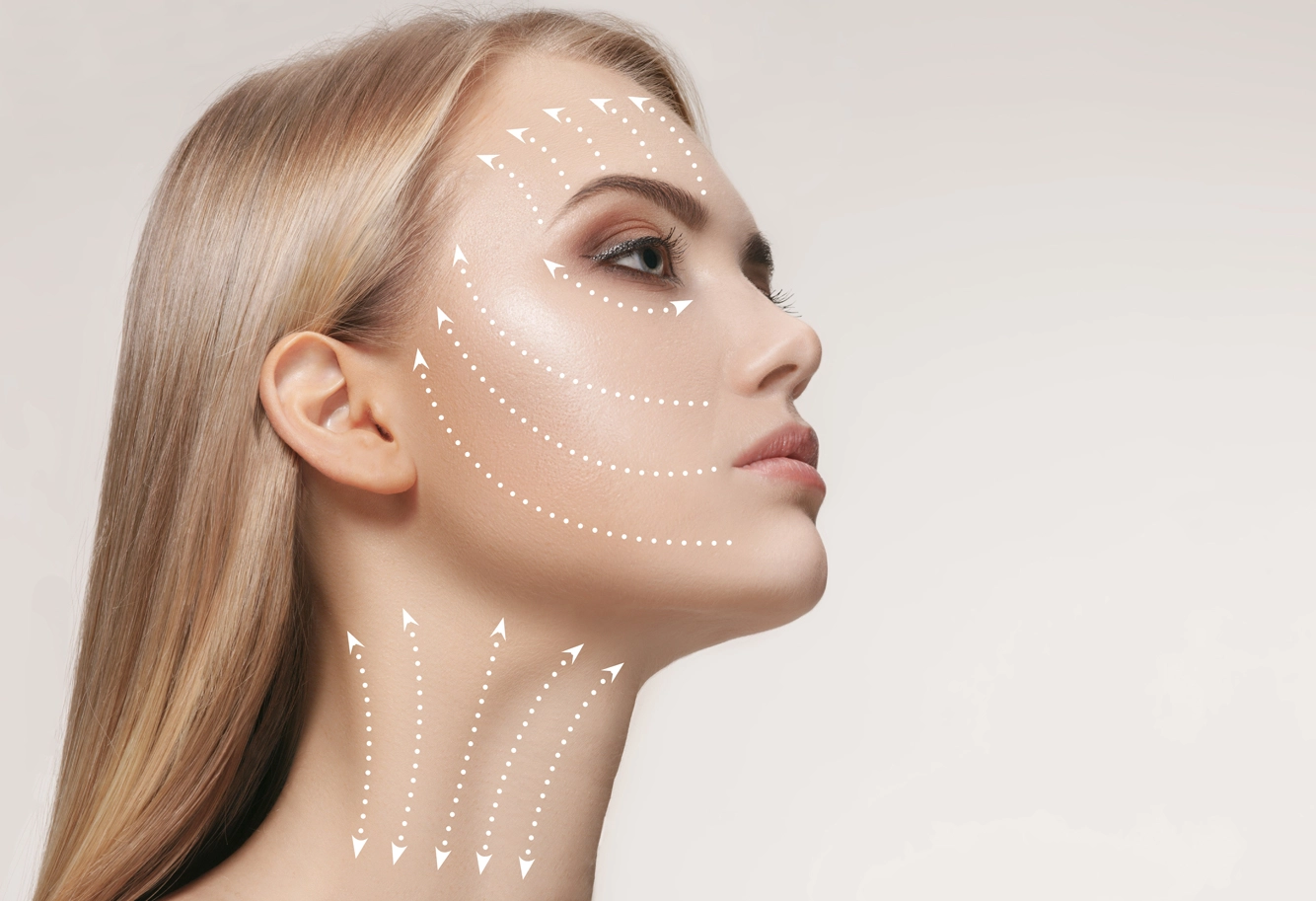
For the summer issue of Vox Aesthetic, we spoke with Dr. Serdar Bora Bayraktaroğlu about full-face rejuvenation. Our subject is not simply a “facelift”; it is a modern approach that reads the upper, middle, and lower thirds of the face together, addressing volume loss, soft-tissue ptosis, the periorbital region, brow position, the jawline-neck complex, and natural expression within one coherent plan.
The result is a conversation that carries both the seriousness of operative anatomy and the warmth of magazine pages. In the right hands, facial rejuvenation is not merely a surgical procedure; it is the art of re-editing the story a face has written with time.
Vox Aesthetic: What should we understand by full-face rejuvenation?
Dr. Serdar Bora Bayraktaroğlu: Full-face rejuvenation is not so much the name of a single operation as it is the name of a holistic strategy that addresses the signs of aging in different facial regions within one integrated plan. If we think of the face as the upper face, midface, lower face, and neck, then brow position, upper-eyelid excess, descent of the malar soft tissues, the lid-cheek junction, the jawline, marionette lines, and neck laxity are all different chapters of the same aging narrative.
For me, full-face rejuvenation means reading these chapters separately and then composing one aesthetic sentence. In other words, it is not merely about erasing a line; it is about restoring the overall facial expression to a more rested, more vital, and more balanced state.
Vox Aesthetic: Why does the face age? Is it only a matter of skin laxity?
Dr. Serdar Bora Bayraktaroğlu: No. Reducing facial aging to the skin alone would be a major oversimplification. The skin is the most visible layer, but facial aging begins much deeper. Over time, the bony framework remodels, facial fat pads lose volume or shift position, the connective-tissue support structures relax, the tone of the mimetic muscles changes, and the skin loses elasticity.
To put it simply: the skeletal stage of the face changes, the soft-tissue padding over it diminishes, the suspension system loosens, and only then does the skin make these alterations visible from the outside. That is why modern facial rejuvenation is not simply about “removing excess skin.” The real objective is to reorganize the supporting layers of the face and restore its volume balance.
Vox Aesthetic: Where does the “tired face” expression that bothers so many people in the mirror come from?
Dr. Serdar Bora Bayraktaroğlu: A tired facial expression usually does not arise from a single cause. The brow may descend slightly, the upper eyelid may feel heavier, the lid-cheek junction may hollow, the malar tissues may migrate downward, the nasolabial fold may deepen, the oral commissures may turn downward, jowling may appear along the jawline, and the neck may loosen. Each of these may look like a small shift on its own, yet together they change the emotional register of the face.
My patients often say, “I do not feel tired, but my face looks tired.” This is precisely where full-face rejuvenation enters the picture: it aims to reduce the visual heaviness of the facial expression without turning the person into someone else.
Vox Aesthetic: Which procedures may be included in full-face rejuvenation?
Dr. Serdar Bora Bayraktaroğlu: The plan varies from patient to patient. For the upper face, an endoscopic brow lift, balancing of the forehead region, and upper blepharoplasty may be considered. In the midface, fat grafting, elevation of the midfacial soft tissues, lower blepharoplasty, and softening of the lid-cheek transition may be planned. In the lower face and neck, a High SMAS facelift, jawline refinement, neck lift, and surgical adjustment of the platysma muscle layer may be appropriate.
In selected patients, rhinoplasty may also be planned in the same session to enhance overall facial balance. The key word here is not “combination” but “harmony.” We do not have to add every procedure to every patient; we must choose the right procedure for the right face.
Vox Aesthetic: What is a High SMAS facelift, and why is it so highly regarded?
Dr. Serdar Bora Bayraktaroğlu: The SMAS, or superficial musculoaponeurotic system, is the fibromuscular support layer beneath the facial skin. In older facelift concepts, the skin itself was often pulled more aggressively. In modern facelift surgery, however, the essential principle is repositioning the deeper support layers that carry the skin. In the High SMAS approach, the aim is to elevate the facial support layer along more effective vectors and to correct cheek and jawline ptosis without placing excessive tension on the skin.
I explain it to patients this way: it is like correcting the rail from which a curtain hangs rather than tugging on the curtain itself. By avoiding excessive skin tension and restoring the underlying support system to its proper position, we aim for a result that is more natural, softer, and longer lasting.
| “A facelift is not about pulling the skin; it is about returning the face’s support system to the right place. The skin then adapts gently to this new architecture.” |
Vox Aesthetic: Why is fat grafting so important?
Dr. Serdar Bora Bayraktaroğlu: Because aging is not only sagging; it is also deflation. Much of the youthful quality of the face comes from volume harmony. The temples, infraorbital area, cheeks, nasolabial region, jawline, and perioral area can all lose volume over time. If we only lift the tissues while ignoring the areas that have emptied, the face may look tighter but also thin or severe.
In fat grafting, adipose tissue harvested from the patient’s own body is used to restore volume in selected regions. The goal is not to inflate the face, but to return the lost soft transitions and allow light to move across the face in a younger, calmer, and more graceful way.
Vox Aesthetic: How do endoscopic brow lifting and eyelid surgery fit into a full-face plan?
Dr. Serdar Bora Bayraktaroğlu: The upper face is like the opening sentence of facial expression. Brow ptosis and upper-eyelid redundancy can give a person a more tired, stern, or sleep-deprived appearance than they actually feel. An endoscopic brow lift aims to reposition the brow and forehead through small incisions. Upper blepharoplasty addresses excess skin over the eyelid and, when necessary, excess fat compartments.
Here, however, restraint is essential. If the brow is elevated too much, a surprised expression may result; if too much tissue is removed from the upper eyelid, the natural character of the eye can be compromised. Good planning preserves the delicate line between a more open gaze and a naturally expressive gaze.
Vox Aesthetic: Why should the lower eyelid and midface be considered together?
Dr. Serdar Bora Bayraktaroğlu: The lower eyelid may appear to be a small anatomical area, but it is intimately connected to the midface. Lower-eyelid bags, infraorbital hollowing, cheek volume loss, and a sharper lid-cheek transition should be evaluated together. If the problem is not only eyelid bulging but also midfacial descent and volume depletion, correcting the lower eyelid alone may not be sufficient.
For this reason, when midface rejuvenation, fat grafting, and lower blepharoplasty are planned together, a softer periorbital appearance can often be achieved. In the ideal result, the person should not look “operated on”; they should look more rested and more luminous.
Vox Aesthetic: Why are the neck and jawline so decisive?
Dr. Serdar Bora Bayraktaroğlu: The jawline is the frame of the face, and the neck is the continuation of that frame. Jowling in the lower face, more pronounced marionette lines, and neck laxity strongly influence perceived facial age. Sometimes, when patients look at their profile in the mirror, what bothers them most is the loss of the cervicomental angle.
In such cases, treating the face alone may not be enough. Neck lifting, platysmal adjustment, and redefinition of the mandibular border are very important parts of full-face rejuvenation. In a beautiful result, there should be no visual disconnection between the face and the neck; they should appear to belong to the same age.
Vox Aesthetic: How can we recognize a natural result?
Dr. Serdar Bora Bayraktaroğlu: A natural result is one in which nobody becomes fixated on a single point of the face. After a well-executed facial rejuvenation, the person appears younger, fresher, and more rested, but the mimicry, gaze, smile, and facial character still belong to them.
What most often disrupts naturalness is over-tightening, the wrong vector, excessive volume, or a standardized plan that ignores the patient’s anatomy. For me, a successful result is one that suits the patient’s own face. It is not about copying another face; it is about revealing the patient’s own youthful potential.
Vox Aesthetic: Is there an ideal age for a facelift?
Dr. Serdar Bora Bayraktaroğlu: There is no absolute age limit. More important than chronological age are the anatomical changes the face demonstrates. In some patients, significant laxity and volume loss may begin in the forties; in others, these signs appear later. Skin quality, genetic structure, weight fluctuations, smoking, sun exposure, and lifestyle all influence this process.
In the past, facelift surgery was often perceived as an operation for older patients. Today, in order to obtain more natural and balanced results, planning can be considered before the problem becomes very advanced. Still, the decision should be based not on a social-media trend, but on examination, expectations, and general health status.
Vox Aesthetic: What is the postoperative course like?
Dr. Serdar Bora Bayraktaroğlu: Although it varies according to the combination of procedures, full-face rejuvenation surgeries are generally performed under general anesthesia, and we usually host the patient in the hospital for one night. After surgery, dressings, supportive measures to reduce edema, and small drains in selected patients may be used.
During the first week, edema, swelling, and bruising are natural parts of the process. Most patients experience this period more comfortably than they expected; pain is usually controllable. Suture removal and follow-up visits are scheduled individually. Return to social life is often gradual after the first week; however, for a wedding, stage appearance, important meeting, or photo shoot, it is healthier to allow a three- to four-week margin.
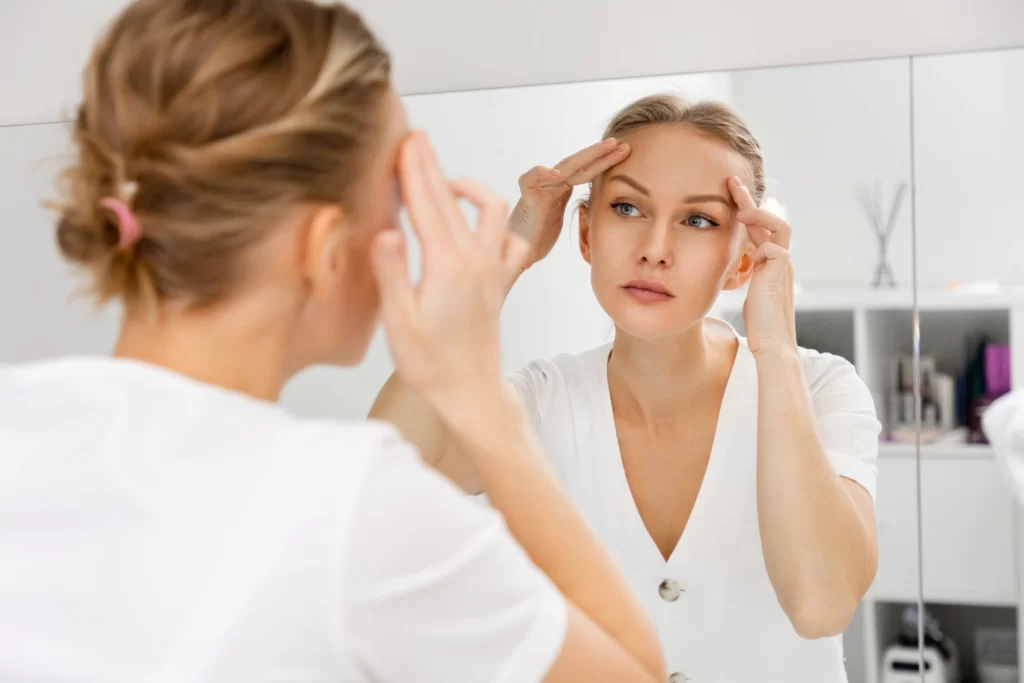
| Case Window: “I Was Tired of Looking Tired” A patient in their mid-50s presented with concerns about descending brows, heavy eyelids, sagging of the cheeks and jawline, neck laxity, and nasal appearance. In the individualized plan, fat grafting, endoscopic brow lifting, eyelid surgeries, a High SMAS facelift, neck lift, and rhinoplasty to complete overall facial balance were evaluated together. The goal was not a dramatic transformation, but a fresh, natural rejuvenation effect in keeping with the patient’s own character. |
Vox Aesthetic: Will there be scars after facelift surgery?
Dr. Serdar Bora Bayraktaroğlu: Every surgical incision leaves a scar; what matters is where and how the scar is planned and how inconspicuous it becomes over time. Facelift incisions are usually placed in areas that can be concealed, such as the sideburn region, natural preauricular creases, behind the ear, and transitions into the hair-bearing scalp. The goal is to achieve scars that are not noticeable from the front, that fade over time, and that disappear within natural folds.
For this reason, it is not accurate to say “scarless surgery.” A more correct statement is this: an incision plan is designed to minimize scar visibility while respecting anatomical transitions. The quality of healing is also related to skin type, smoking, postoperative care, and genetic characteristics.
Vox Aesthetic: How long-lasting are the results?
Dr. Serdar Bora Bayraktaroğlu: The effect of facial rejuvenation can continue for years; however, no operation stops time. We move the face to a younger and more balanced point, and then the person continues to age from that new point. Over the years, minor laxity or volume changes may reappear.
If necessary, revisions, small refinements, or supportive procedures can be performed years later. What matters most is that the first operation is planned correctly. A procedure performed in the right anatomical plane, without forcing the skin and with respect for the tissue, also keeps future options healthier.
Vox Aesthetic: For whom might this surgery be unsuitable?
Dr. Serdar Bora Bayraktaroğlu: Careful evaluation is required for patients with uncontrolled systemic disease, bleeding or coagulation disorders, heavy smokers who cannot discontinue smoking, individuals with unrealistic expectations, or patients who may have difficulty psychologically tolerating the surgical process. Timing is also very important in patients planning rapid weight loss, because weight changes can affect facial volume and the final result.
As with every aesthetic operation, the most important step is the examination. Photographs, videos, social media, or recommendations from friends can provide an idea; but a surgical decision cannot be made without seeing the individual anatomy.
Vox Aesthetic: If you had to summarize full-face rejuvenation in one sentence, what would you say?
Dr. Serdar Bora Bayraktaroğlu: Full-face rejuvenation is not the claim of returning a face exactly to its youth; it is the art of reducing the signs of fatigue, deflation, and ptosis in a way that respects the patient’s anatomy, guiding the face toward a more vital, more balanced, and more authentically personal expression. It may sound romantic, but that is the most beautiful aspect of surgery: bringing science and art together on the same face.