



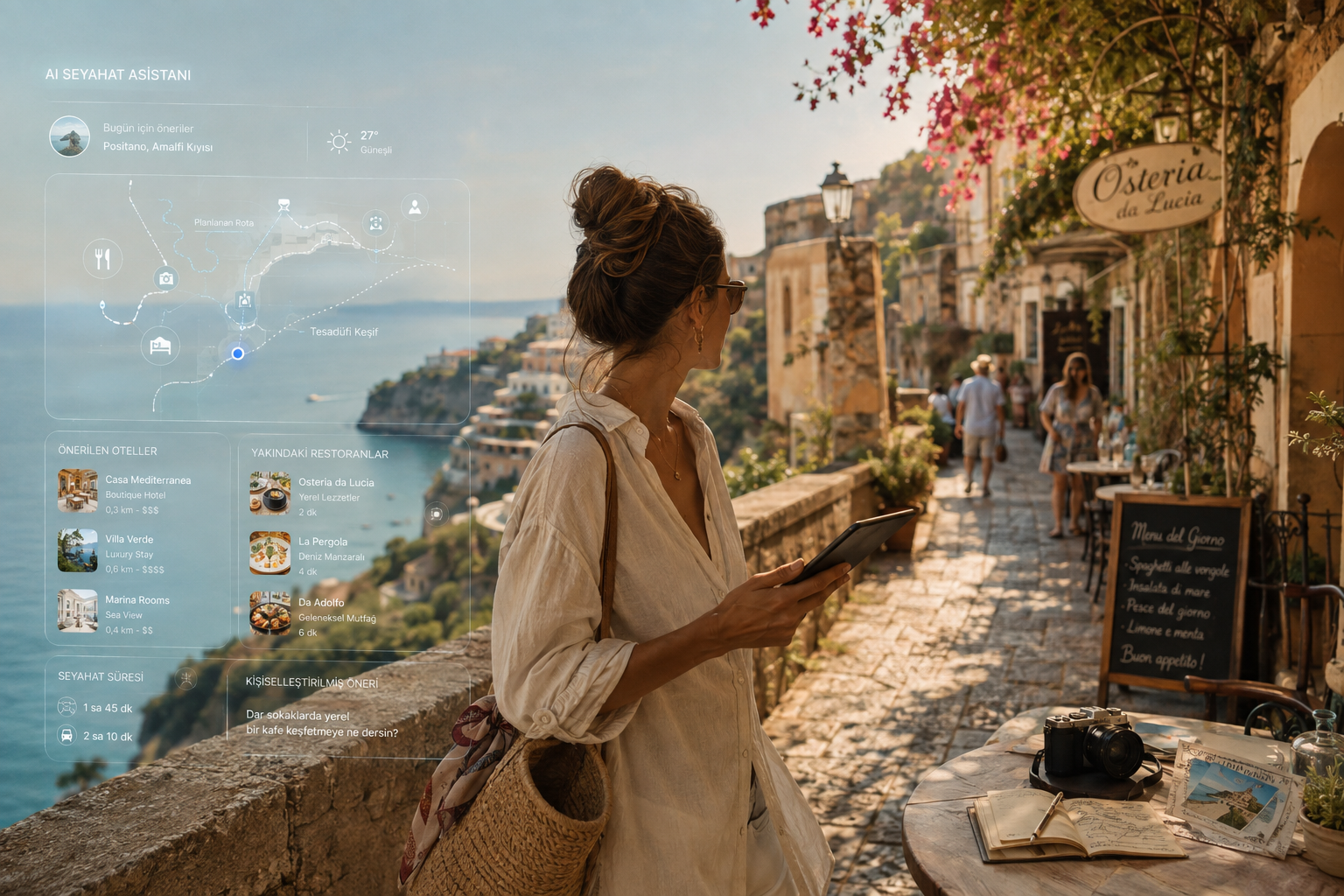
In 2026 travel planning, artificial intelligence takes on a more visible role from finding inspiration and building routes to choosing hotels and booking restaurants. Yet its strongest use is not replacing human instinct, but helping us filter an overload of information quickly and ask better questions. Travel is no longer shaped by a single source, but by a combination of AI, user reviews, video content and personal memory.
AI travel assistants can save time especially in summer planning: a beach suitable for families with children, an art-focused weekend, a safe route for a woman traveling alone or a local market list for a gastronomy lover. Still, the final decision is shaped by human variables such as weather, budget, mood and sudden curiosity.