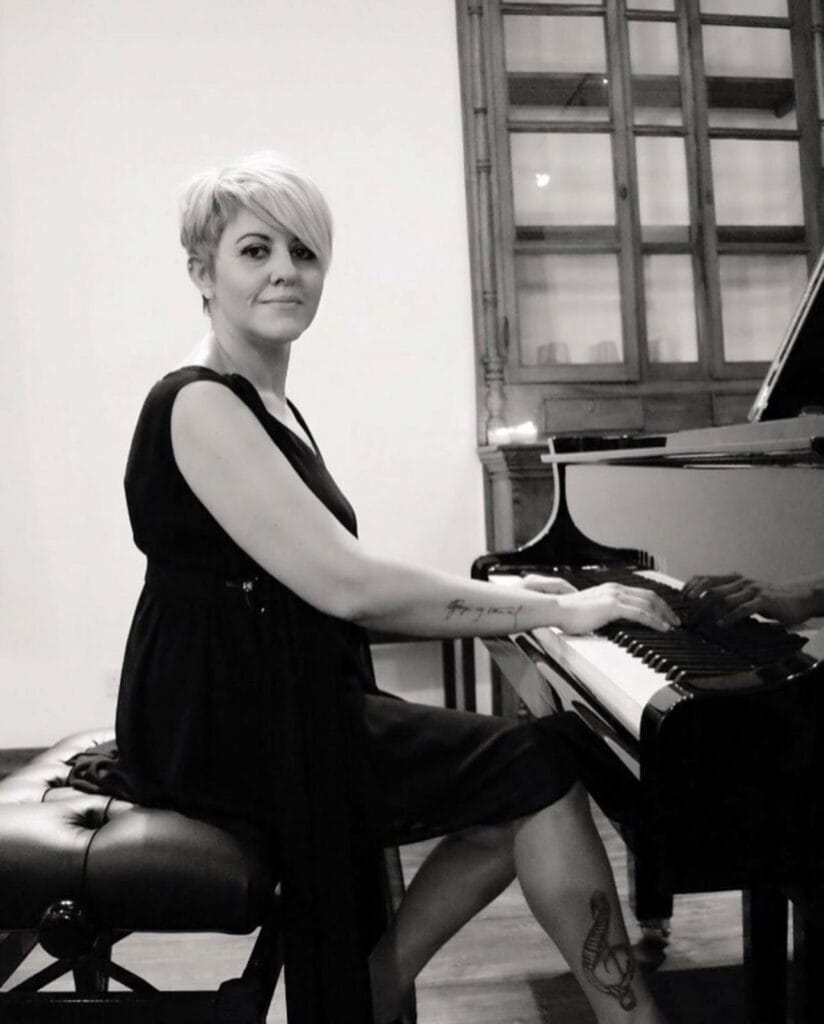



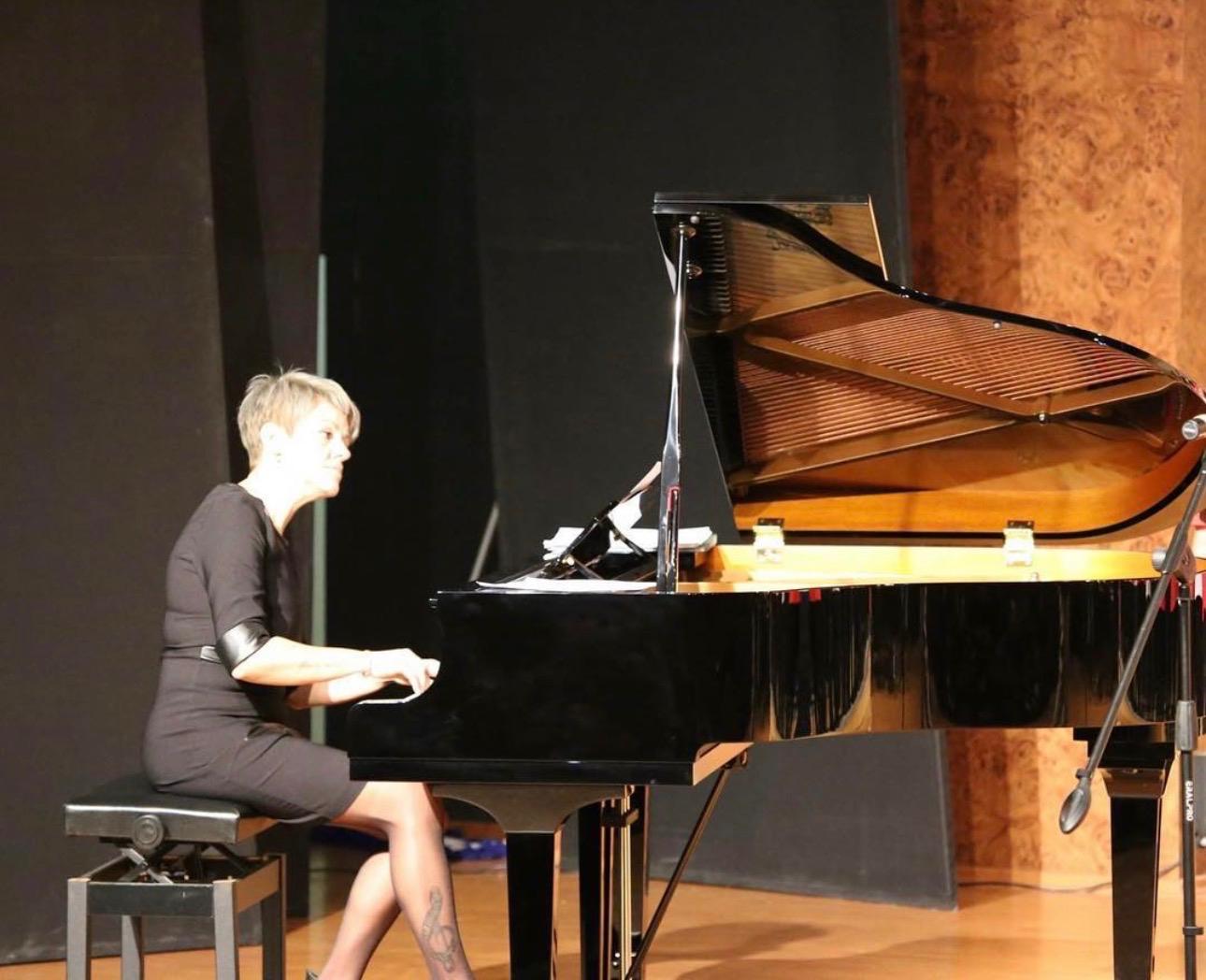
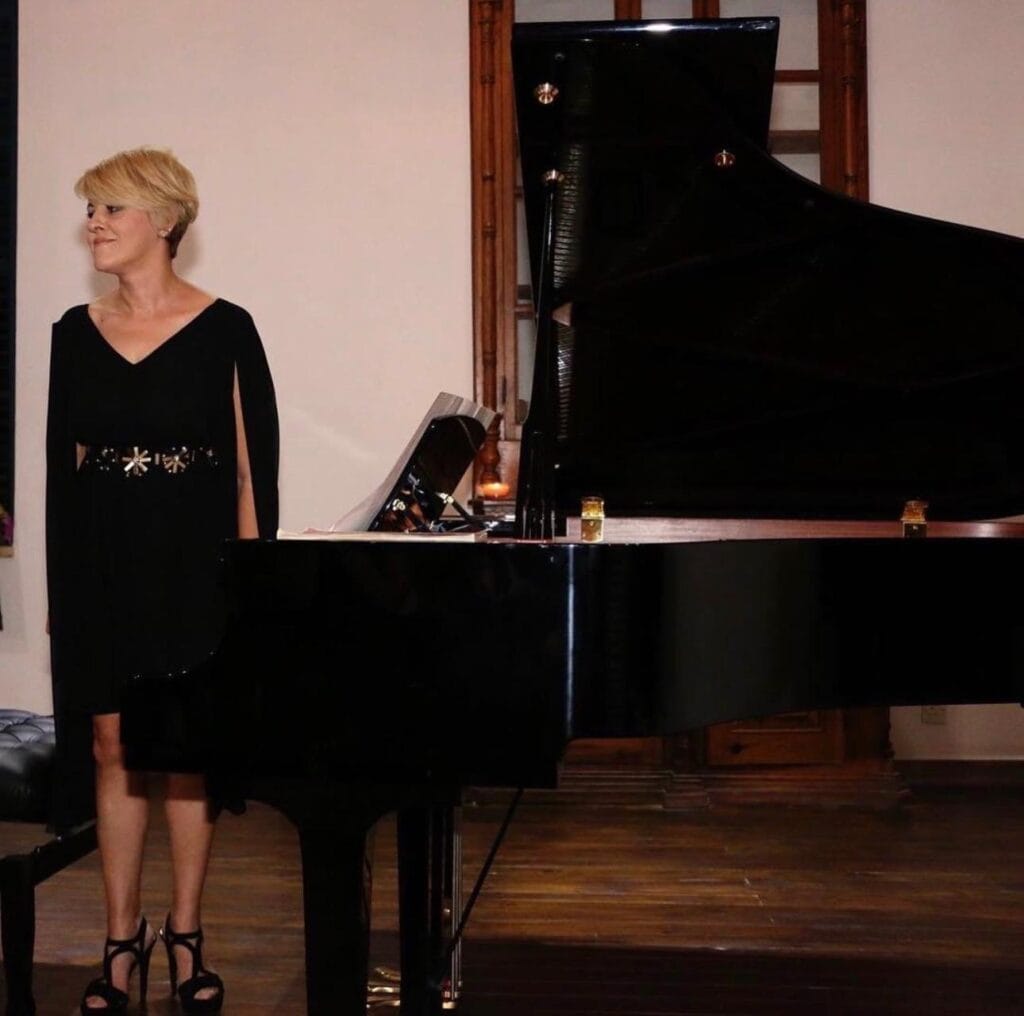
Dear music lovers, in this month’s column I am welcoming a guest who is very dear to me: my beloved teacher, with whom my path crossed in high school and with whom I studied piano for four years, pianist and educator Dr Gulnur Unluturk.
My dear teacher, thank you so much for accepting my invitation. We shared some truly valuable work. Your diligence, the example you set for your students and your musicianship have always impressed me. Today, as your former student and now your colleague, I have planned a conversation about music, music education, instrumental training and body awareness.
Dear Ms Gulnur – my teacher Gulnur – beyond your importance in my life and everything valuable I learned from you, I would love to hear in your own words how you first encountered the piano and the key developments in your career.
First of all, thank you very much for giving me a place in your magazine column.
I can say that the piano entered my life before I chose it. There was a piano in our home when I was very young, so naturally I encountered it early. Over time, that curiosity became the profession at the centre of my life. After high school, I pursued academic music training and studied piano at Marmara University. Yet piano education was never simply a matter of playing the correct notes, acquiring technical skill or performing a work successfully on stage. From my student years onwards, I was always interested in the question: ‘What is actually happening in a person’s body and mind while they play the piano?’
That curiosity gradually determined the direction of my academic work. My master’s research focused on relaxation techniques in piano playing. Over the years, both while working with students and through my own experience as a pianist, I saw one point increasingly clearly: technical development is not only about the fingers. The better you know your body, recognise unnecessary tension and consciously establish the relationship between mind and body, the more your relationship with the instrument changes.
Throughout my career, teaching and performing continually nourished one another. I kept learning as I taught and questioning anew as I learned. I wrote books on piano education and worked with many students of different ages and levels.
I continued my training and work through international music-examination systems. Perhaps the most important thing in my career, however, has been never saying, ‘I have arrived.’
Later, I began to view music through another window, and my doctoral work led me to the relationship between Alzheimer’s disease and music. Music, which I had inhabited for years as a performer and educator, now became the subject of scientific research.
Looking back today, I see that the journey that began with the piano carried me from education to body awareness and then to the relationship between music and health. After all these years, I still feel like a piano student who continues to learn. I do not believe there is a true point of arrival in music. As a person changes, so does the music they play: their body, their way of hearing, their touch and even their perception of silence all change.
Perhaps the sentence that best describes my relationship with the piano today is this:
“For me, the piano is not an instrument I learned, but a language I continue to learn throughout my life.”
From what you have said about your career, I can see that the relationship between relaxation and the body in instrumental education and the performing arts has interested you since university. What brought piano and body awareness together for you? When did you realise the importance of this relationship?
I first recognised the relationship not in theory, but through my own body. In piano education we naturally spend many years focusing on finger technique, playing the right notes, speed, articulation, nuance and interpretation.
At a certain point, however, I began to ask: why do I feel completely free at the piano on some days, yet struggle with the same passages on others? Why can a movement I understand technically happen with ease one day, then become an unnecessary struggle in my body on another? During my university years, these questions became increasingly important. Especially when studying difficult works, I began to notice that the sound is influenced not only by the fingers, but by the shoulders, back, neck, arms, breath and even how we sit at the piano. A basic but important thought then formed for me: it is not only our hands that play the piano, but our whole body. How much muscular force do we truly need to perform a movement? Which muscles need to work, and which need to remain free? Why do we raise our shoulders, clench our jaw or hold our breath while playing a passage? Most of the time, we are not even aware that we are doing these things. This is where my interest in ‘relaxation’ began. Over time, however, I learned that relaxation does not mean letting the body go completely, as many people assume. The body is, of course, active while playing the piano. What matters is using the muscles necessary for movement while eliminating unnecessary tension – using the body’s energy economically and consciously. This curiosity later became the basis of my master’s work on relaxation techniques in piano playing. As the years passed, however, the subject moved beyond relaxation and developed into body awareness.
We cannot release a tension of which we are unaware. When I work with students today, I first try to help them notice their own bodies. Very simple questions such as ‘Where is your shoulder right now?’, ‘Are you breathing?’ and ‘Do you really need this much force for that movement?’ can sometimes solve a technical problem far more quickly than repeating it for hours. Perhaps most importantly, when the body is liberated, not only does technique become easier; musical expression is liberated too. The sound we produce at the piano does not begin at the moment we touch the key. Its journey begins in the mind, travels through the body and finally reaches the key through the fingers. I therefore see piano technique not simply as ‘finger technique’, but as a highly sensitive form of communication between mind, body and instrument.
As an educator and musician, I would like to put to you a question I am often asked. ‘The piano is a mechanical instrument: you press a key and it produces a sound. So what distinguishes the sounds produced by different players?’
That is a wonderful question. Yes, the piano is a mechanical instrument. Press a key and the mechanism moves, the hammer strikes the string and a physical sound is produced. At first glance, we might think, ‘If we press the same key, should it not produce the same sound?’ Yet this is precisely where music ceases to be mechanical and becomes something human. At the piano, we decide not only which key to press, but how to approach it, how quickly to touch it, where the sound comes from and where it is going, and how it relates to the next sound. Two pianists can play the same work, on the same piano, using the same notes, and produce two entirely different interpretations. Part of this difference lies in the quality of movement transferred to the key. The coordination of the fingers, hand, wrist, arm and, indeed, the whole body – together with the use of weight and the speed and timing of movement – affects the dynamic character of the sound.
For me, however, the true difference emerges less in individual sounds than in the relationships between them.
Music is not made from a single note. How one sound connects to the next, where the phrase is going, where it breathes, how time is used, how nuances are shaped and how the pedal is touched – all of these reveal the pianist’s musical thought.
There is another crucial dimension: before touching the key, the pianist forms in the mind the sound they wish to hear. I try to explain this to my students as well. First, you must hear the sound in your mind. If you do not know what kind of sound you want, you cannot ask your body to produce it. This is where body awareness enters again. A body held in excessive tension does not relate to the instrument in the same way as a body moving freely and with coordination. The more consciously the body is used, the greater the pianist’s ability to transfer the imagined sound to the instrument. Beyond all of this, however, there is something deeply personal: what a person has lived through.
Our age, experiences, joys, losses, outlook on the world and even our mood on a particular
day change how we perceive music. We do not play a work at fifty in the same way we played it at
twenty. The notes are the same, the piano is the same, and perhaps our fingers even make the same movements; but we are not the same person. A pianist’s ‘touch’, in my view, is therefore not simply a physical quality formed at the fingertip.
It is the mind, ear, body, musical experience and life experience converging and becoming sound.
Perhaps I can answer the question in a single sentence:
Anyone can press a key on the piano; drawing music from that key means conveying mind, body and emotion to the instrument at the same time.
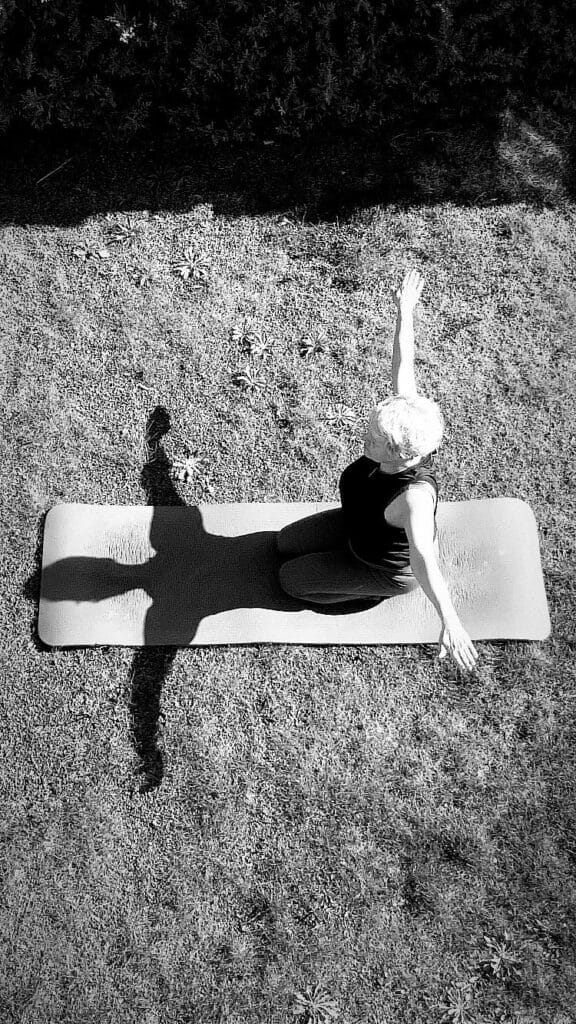
Being a musician actually means considering the body from many perspectives: nutrition, sleep, and bone and muscle health. Having trained extensively and worked with many people, would you say that few teachers address this side of the profession? Should artistic training also cover body awareness as a form of self-care?
I absolutely believe it should. Looking back on my own years of training, I wish we had been introduced to our bodies as thoroughly as we were introduced to our instruments.
For a musician, the body is in fact the first instrument. The piano may stand outside me, but my body is the means by which I reach it: my hands, arms, spine, muscles, joints, breath and nervous system. All are part of performance.
Even so, traditional instrumental education was dominated for many years by an approach built principally around ‘working more’. If a passage does not work, repeat it more; if technique is insufficient, practise more exercises. Yet sometimes the problem is not too little practice, but using the body incorrectly or excessively. Repeating a faulty movement hundreds of times may teach it more deeply to the body rather than improve us. Musicianship is also a long-term profession. We work for hours in the same position and repeat extremely small, precise movements thousands of times. Add stage stress and performance anxiety, and protecting the body becomes not a luxury but a condition of professional sustainability. I therefore believe artistic training should address fundamental anatomy, sound practice habits, sleep and rest, nutrition, breath awareness, and muscular and joint health. My encounter with yoga was a continuation of this thinking. I began to experience the body-mind relationship that I had questioned for years through the piano from a much broader perspective. Yoga gave me not only flexibility and strength, but taught me to listen to my body. I became more aware of where I was exerting too much effort, holding my breath or ignoring the body’s signals. Interestingly, all of this also affected my piano playing. Yet body awareness should not be seen as physical health alone. Self-care also means being able to stop, rest, recognise limits and create mental space when necessary. It is not realistic to expect free musical expression from a body that is tired, in pain or under constant stress. We should therefore ask students not only ‘How are you playing?’ but sometimes ‘How do you feel while you play?’ Perhaps this is exactly what is missing from some artistic education: teaching students to care not only for the instrument, but also for the person who will play it. A musician’s most precious instrument is their own body.
The Gulnur teacher I knew in high school was tremendously hard-working and always determined, and made her students feel that music, like life, is a continuous, never-ending adventure. I especially enjoyed turning pages for you while you practised Mozart’s ‘Sonata in A minor’. Seeing through my own teacher that knowledge and being an artist are always evolving gave me the determination to work. But then there is another Gulnur who seems truly to have risen from the ashes. Did yoga bring about that change?
‘Rising from the ashes’ is a beautiful expression, though I think I would describe it as ‘returning to myself’. The Gulnur you knew in high school really did work very hard – and she still does. My curiosity and excitement about learning have never changed. Even then, I believed it was immensely valuable to stand before my students not only with what I knew, but as a teacher who was continuing to learn. Hearing now that turning pages while I practised left such an impression on you is deeply moving. Perhaps that is part of teaching: years later, we discover where a sentence, a small gesture or something we did without even noticing touched a student’s life. So what changed afterwards?
Perhaps for many years I lived life somewhat through lists of things to be done: working, teaching, learning, setting new goals and achieving them. Like music, academic life continually demands effort and discipline. I did all of these things with great love, and I still do. Over time, however, I realised that while pursuing the mind and achievement, I also needed to hear the voice of the body and spirit. Yoga entered my life at precisely that point. At first, I saw it mainly as a physical practice. Gradually, I realised that its greatest gift was not flexibility. It taught me to slow down, listen to my body and remain in the present. How interesting that, after years of teaching my piano students to release unnecessary tension and find freedom within movement, yoga began to show me the same principle in life. I understood more clearly that I did not have to control everything, that letting go can also be a strength, that the body’s small signals matter and that our relationship with ourselves affects every other relationship in our lives. I do not separate the old Gulnur from the new. One gave birth to the other. The hard-working, curious woman who always wants to learn is still here. Beside her now stands another Gulnur who listens more closely to her body, gives herself more space and knows that life is not solely about achieving goals. Perhaps ageing teaches us this: how to change without abandoning ourselves.
I believe this change is reflected in my music too. When I look at a work today, I do not ask only, ‘How can I play this better?’ I also ask, ‘What is this music saying to me, and what can I say to it today?’
So the answer is yes: yoga has played a very important part in this transformation. Yet I was not reborn through yoga alone, but through what I have lived, music, my students, my academic journey, the difficulties I encountered and life itself.
Today, I also see a powerful kinship between music and yoga. Both contain breath, rhythm, balance and flow; above all, both require presence in the moment. Perhaps what you call rising from the ashes is exactly this: not becoming someone else, but moving a little closer to ourselves through everything the years have added.
We have occasionally discussed the healing power of music with other guests. I know you completed a very valuable doctorate on the connection between music and people with Alzheimer’s disease. I would like to hear why you chose this subject and what you discovered along the way.
This may be the most personal question in the interview. My doctoral research on Alzheimer’s and music began not only from academic curiosity, but from my mother. Through her Alzheimer’s disease, I became not merely a researcher observing the condition from outside, but a daughter experiencing how it affects a family in daily life. Alzheimer’s is an extremely difficult disease. Over time, you see changes in the memory, behaviour, relationships and everyday abilities of someone you love. Amid all those changes, one thing affected me profoundly: music. Although my mother struggled to remember certain things, she could still respond to familiar music she had loved in the past. When a song began, I sometimes saw her expression change or watched her become calmer; I sensed that the music had touched a memory still present somewhere within her. As a musician, I could not remain unaffected. The question ‘Why can music still reach someone when they are beginning to forget so many things?’ grew in my mind. Eventually, this personal observation became an academic question. For my doctorate, I decided to investigate the effects of individualised music-listening activities on the cognitive and functional status of patients with advanced Alzheimer’s disease. ‘Individualised music’ was one of the most important aspects of the study. Rather than playing the same music to everyone, I believed that music connected with each person’s life story might matter: a song from youth, music played at a wedding, a melody associated with family. A few minutes of music can sometimes touch a very distant point in a person’s life story.
I worked with 54 patients with advanced Alzheimer’s disease. We divided the participants into two groups and conducted cognitive and functional assessments at specified intervals over 12 weeks.
In the group that listened to individualised music, we observed short-term positive changes, particularly in certain cognitive measures. Alzheimer’s is, of course, a progressive disease, and it would not be scientifically correct to describe music as a treatment for it. Our findings did suggest, however, that music – especially when connected with personal history – may be a noteworthy tool for cognitive stimulation.
Some moments from the research remain with me more vividly than the figures and statistics. A person in front of you may communicate only to a very limited extent, yet when familiar music begins, you see the smallest change in their face: a glance, a smile, a subtle response to the rhythm. As a researcher, you try to measure these things; as a musician and a human being, you cannot measure the effect they have on you. The study showed me once again that music is not only an aesthetic art belonging to concert halls or educational institutions. It can be a powerful bridge between a person’s past and present. For me, that was the most meaningful aspect of the doctorate. I was able to bring together the helplessness I experienced as a daughter facing my mother’s illness, the music I had inhabited for years, and my scientific curiosity as an academic. I could not change my mother’s illness. By following a question she inspired, however, I tried to produce a scientific study that might make even a small contribution to other people with Alzheimer’s and their families.
Perhaps that is why I see music differently now. A person may forget a name, a date or even someone very close, while a melody continues to live in a place beyond the reach of memory. Music’s greatest power may be its ability to reach the part of a person that is still there.
My dear teacher Gulnur, thank you for accepting my invitation and appearing in my autumn column. I am grateful that you have joined this series, which I think of as an expression of loyalty and gratitude.
It is I who should thank you. This was not simply an interview in which I described my professional journey; it brought together, in a completely new place, a relationship that began years ago between teacher and student.
For a teacher, one of the greatest joys must be learning years later that you touched a student’s life in a positive way. While teaching, we do not know which words, actions or tiny shared moments will remain in a student’s memory. Hearing you speak of those days with such affection and thinking of me as part of this series about loyalty is truly precious. Yet I believe loyalty is reciprocal. As teachers give something to their students, students also leave marks on their teachers’ lives. I have learned a great deal from my students over the years. Witnessing their growth, seeing them find their paths and later become productive people in their own fields has been one of the finest gifts of my profession.
This conversation also allowed me to look back at my own journey. From the little girl at the piano to the teacher, musician and academic I am today, I was reminded how many people, students, teachers, pieces of music and lived experiences have left their mark. Thank you for welcoming me into your autumn article with such sincerity.
To be able, years later, to speak with a former student about music, learning, change and life remains one of the most beautiful aspects of teaching. I am grateful that our paths once crossed through music, and that today, from different places along the same road, we can still call out and answer one another.