


Bone health often enters people’s lives only after osteopenia, osteoporosis or a fracture. Yet bone is a dynamic tissue that responds to mechanical loading throughout life. In 2026, healthy-aging thinking is moving away from the idea of protecting bones only later and toward building bone and muscle reserve earlier. That reserve can be imagined as a biological bank account.
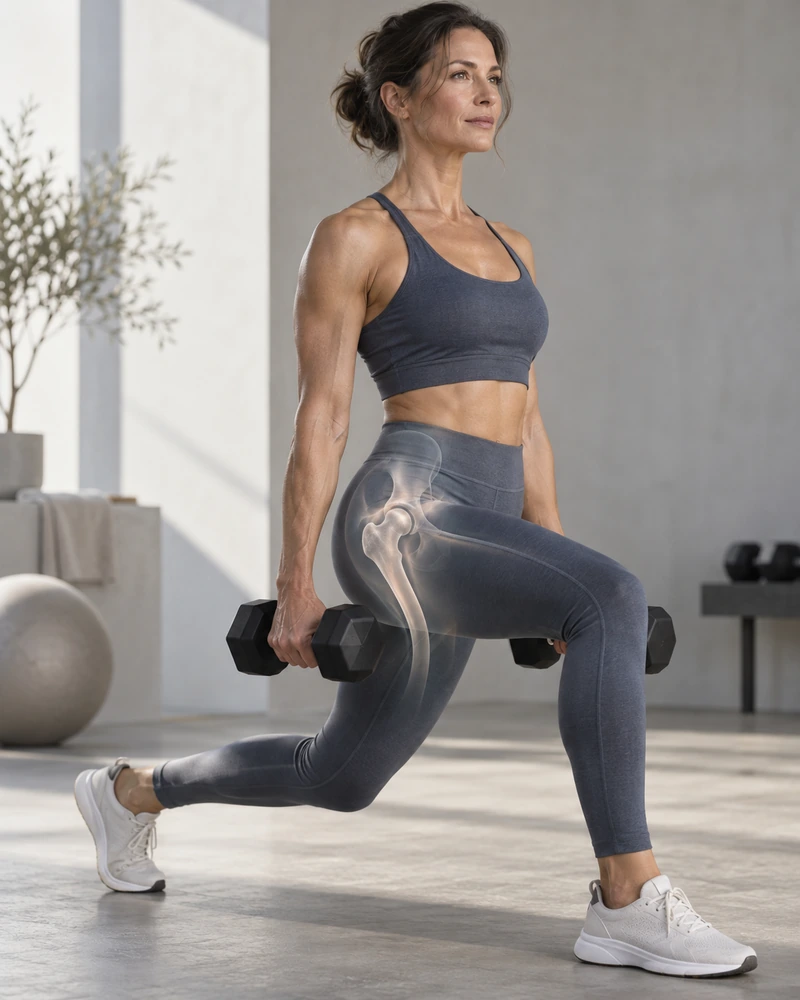
Resistance exercise, walking, stair climbing and, for appropriate individuals, impact activities such as jumping provide mechanical signals to bone. The pull of muscle on bone is part of the same process. The best programme depends on age, joint health, balance and fracture risk; people with known osteoporosis should not begin high-impact training without professional guidance.
Bone health also cannot be reduced to calcium supplements. Adequate protein, vitamin D status, hormonal health, smoking and alcohol patterns, energy balance and sleep all belong to the wider picture of bone metabolism. Balance and coordination work matter too, because preventing a fall can be just as important as strengthening bone itself.
Bone is continuously broken down and rebuilt throughout life, but preserving bone mass becomes increasingly important with age. Resistance exercise, weight-bearing activity, adequate protein, calcium and vitamin D status, together with balance training, form the foundation of bone-health strategies. The ‘bone bank’ idea is about building and protecting reserve before fragility appears rather than reacting only after a fracture.