



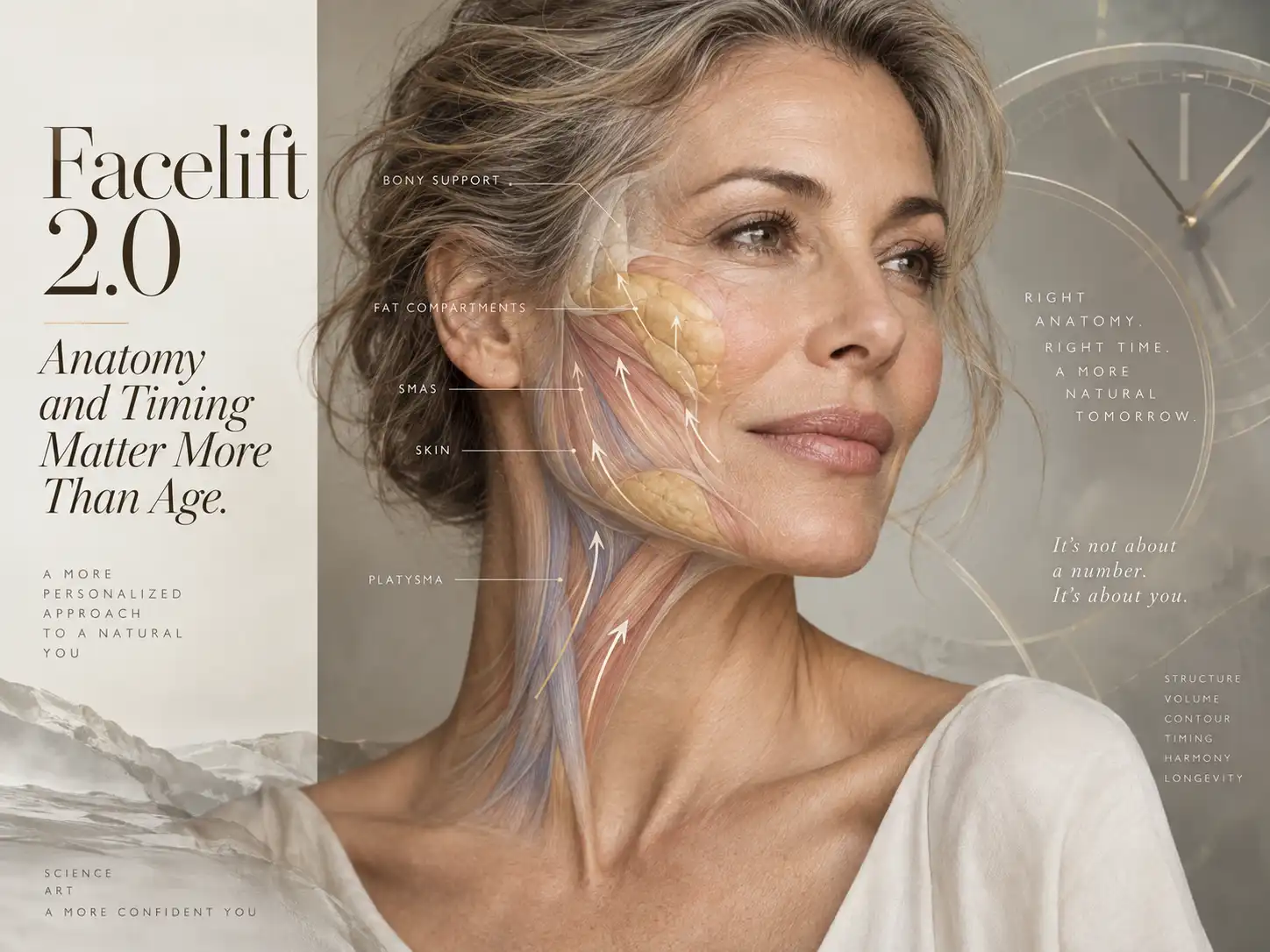
For years, facelift conversations were dominated by one question: “What is the right age?” In 2026, a better question is: which anatomical layers of the face have actually changed? Two people of the same age can differ completely in skin quality, fat distribution, ligament laxity, bone support, neck anatomy and previous procedures. Calendar age alone is therefore a poor surgical measure.
Modern facelift thinking is less about pulling the face upward and more about repositioning tissues along natural anatomical vectors. Depending on the surgeon’s technique and the patient’s needs, the SMAS, deep plane, neck musculature and fat compartments may be addressed differently. The goal is not to reduce expression or make everyone look the same age, but to manage laxity while preserving identity.
Timing also requires avoiding two extremes. Surgery performed too early may be unnecessary, while waiting until very advanced laxity can make the plan more extensive. The decision should be based less on one line in the mirror and more on tissue displacement, neck contour, recovery expectations, photographs, clinical examination and the person’s life circumstances.
In contemporary facelift planning, the more useful question is often not ‘what age?’ but ‘which anatomical layers have changed, and how much?’ Skin, SMAS, neck tissues, fat compartments and skeletal support age differently from person to person. Two people of the same chronological age may therefore need completely different strategies, with timing based on anatomy, biological aging pattern and expectations.