



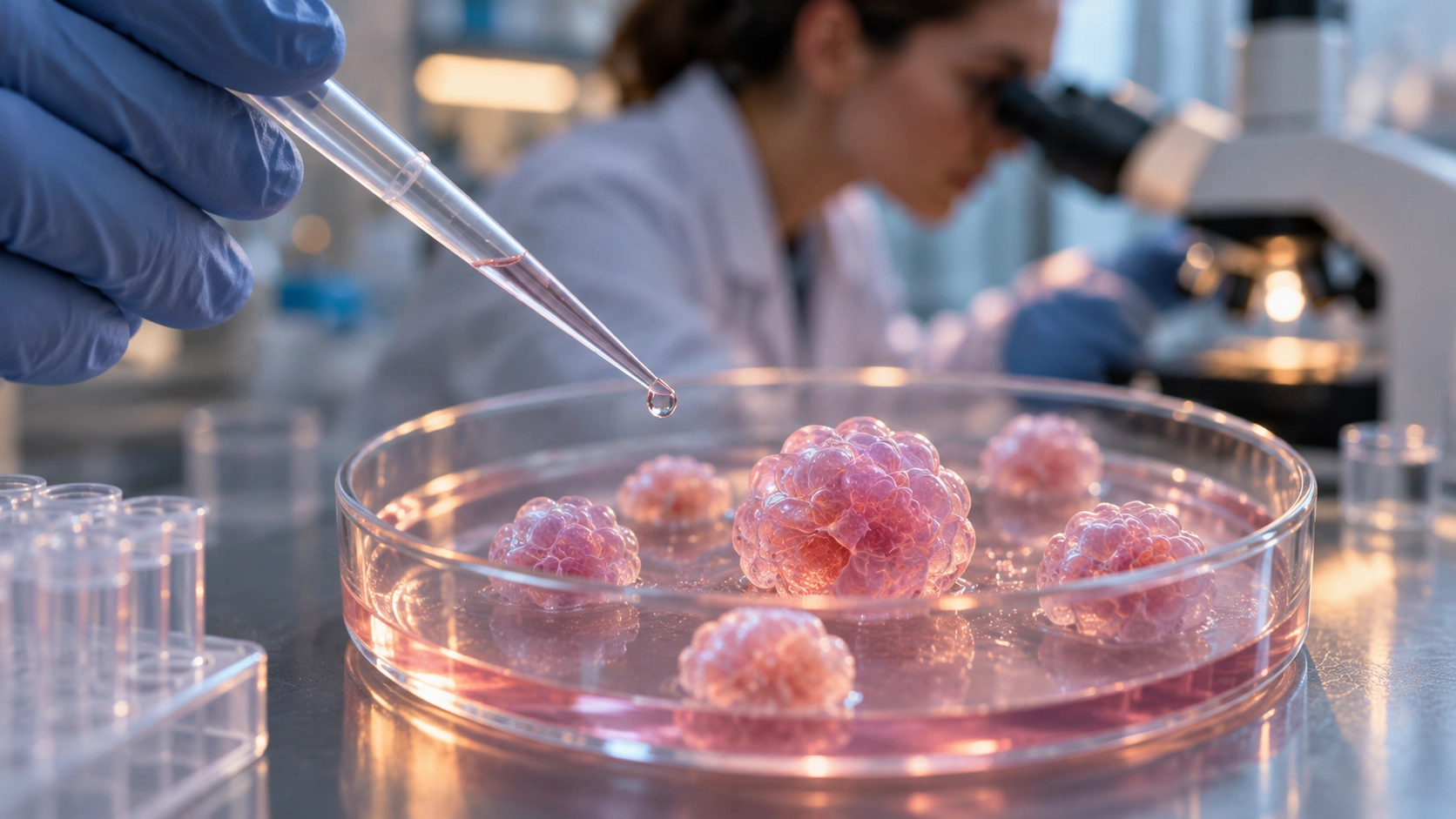
Organoids are three-dimensional systems grown in the laboratory from stem cells or tissue cells that reproduce selected structural and functional features of real organs. Major reviews published in 2026 show their expanding use, from studying disease mechanisms to testing drug responses. Models of intestine, brain, liver, tumors and heart are becoming important tools across modern biology.
Their most striking potential lies in personalized medicine. Organoids created from a patient’s tumor or tissue can be exposed to different therapies in the laboratory, giving rise to the idea of a biological “avatar” that may help support treatment selection. Organ-on-chip systems add more realistic conditions such as flow, mechanical forces and interactions between multiple tissue types.
An organoid, however, is not a complete miniature copy of a human organ. It may incompletely represent blood vessels, immunity, innervation and communication with other organs, and standardization between laboratories remains a major challenge. Organoids are therefore not a magical technology that will eliminate animal models or clinical trials overnight.
Organoids are three-dimensional biological models grown from stem cells or patient tissue that reproduce selected cellular features of real organs. They are not perfect miniature organs, but they can help researchers study tumor behavior, drug response, development and some genetic diseases in the laboratory. When made from a patient’s own cells, they come unusually close to the idea of a personalized biological avatar for research and treatment testing.