



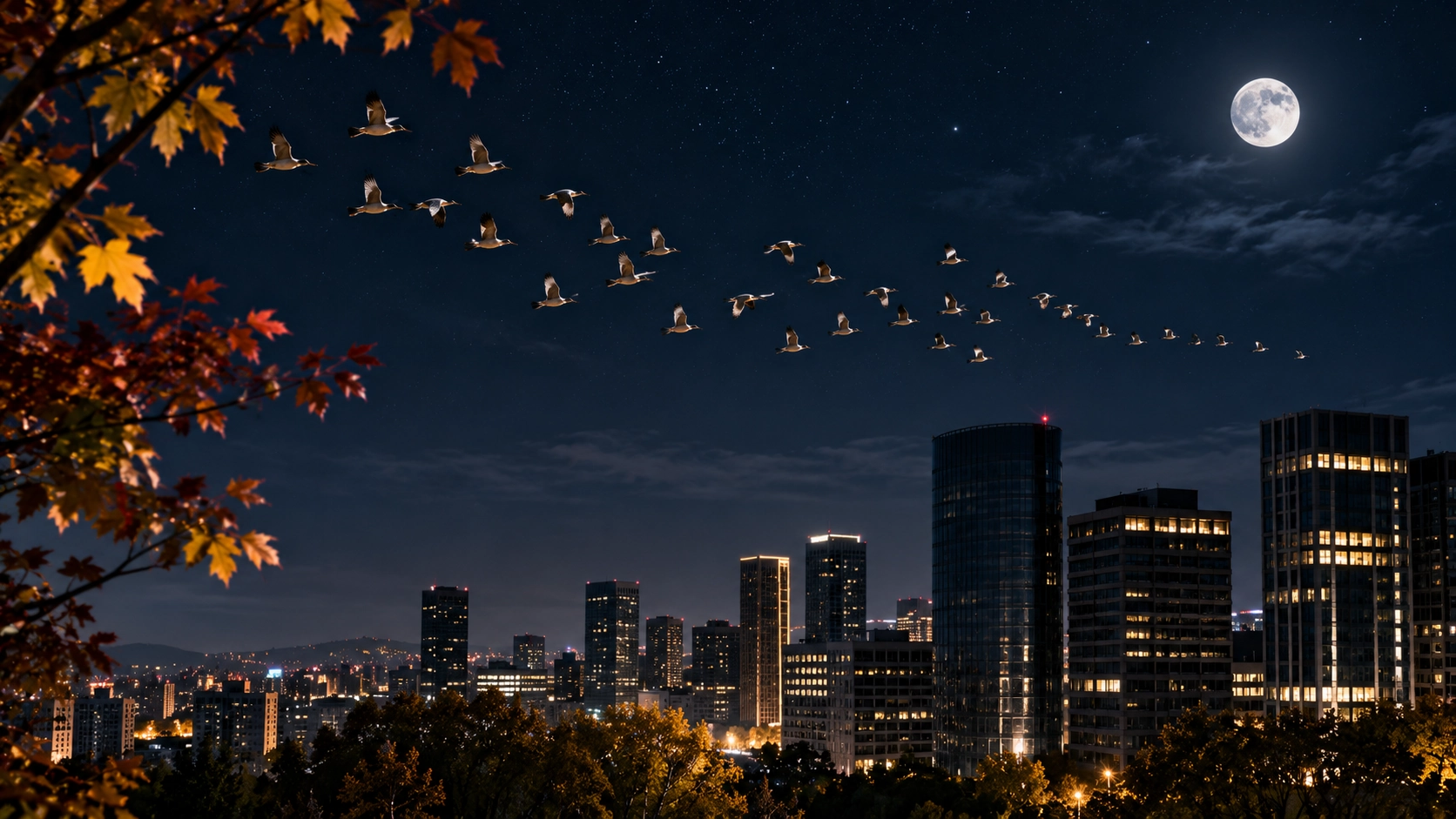
On autumn nights, the sky becomes a busy migration corridor that most of us never notice. Millions of birds travel between continents and across seas after dark, using stars, magnetic cues, weather and geography to navigate. Studies published in 2026 are drawing attention to the possibility that even relatively low levels of artificial light can alter the flight behavior of nocturnal migrants.
On foggy or cloudy nights in particular, lighting from cities, ports, towers and coastlines can attract or disorient birds. Research has observed lower flight altitudes and altered airspeeds near illuminated areas, potentially increasing collision risk. The problem is not limited to giant spotlights; the combined glow of the city matters too.
The solution is not to make every city completely dark. During peak migration periods, reducing unnecessary exterior lighting, limiting upward light, making glass safer and directing illumination only where it is needed can help. This is why seasonal “Lights Out” programmes have become important conservation tools in many cities.
Much bird migration happens at night, which gives urban lighting a largely invisible ecological impact. Bright, poorly directed artificial light can disorient some migrants, draw them toward tall buildings or increase energy loss. During migration periods, reducing unnecessary building illumination and limiting upward light can become a simple but meaningful conservation measure alongside habitat corridors.