



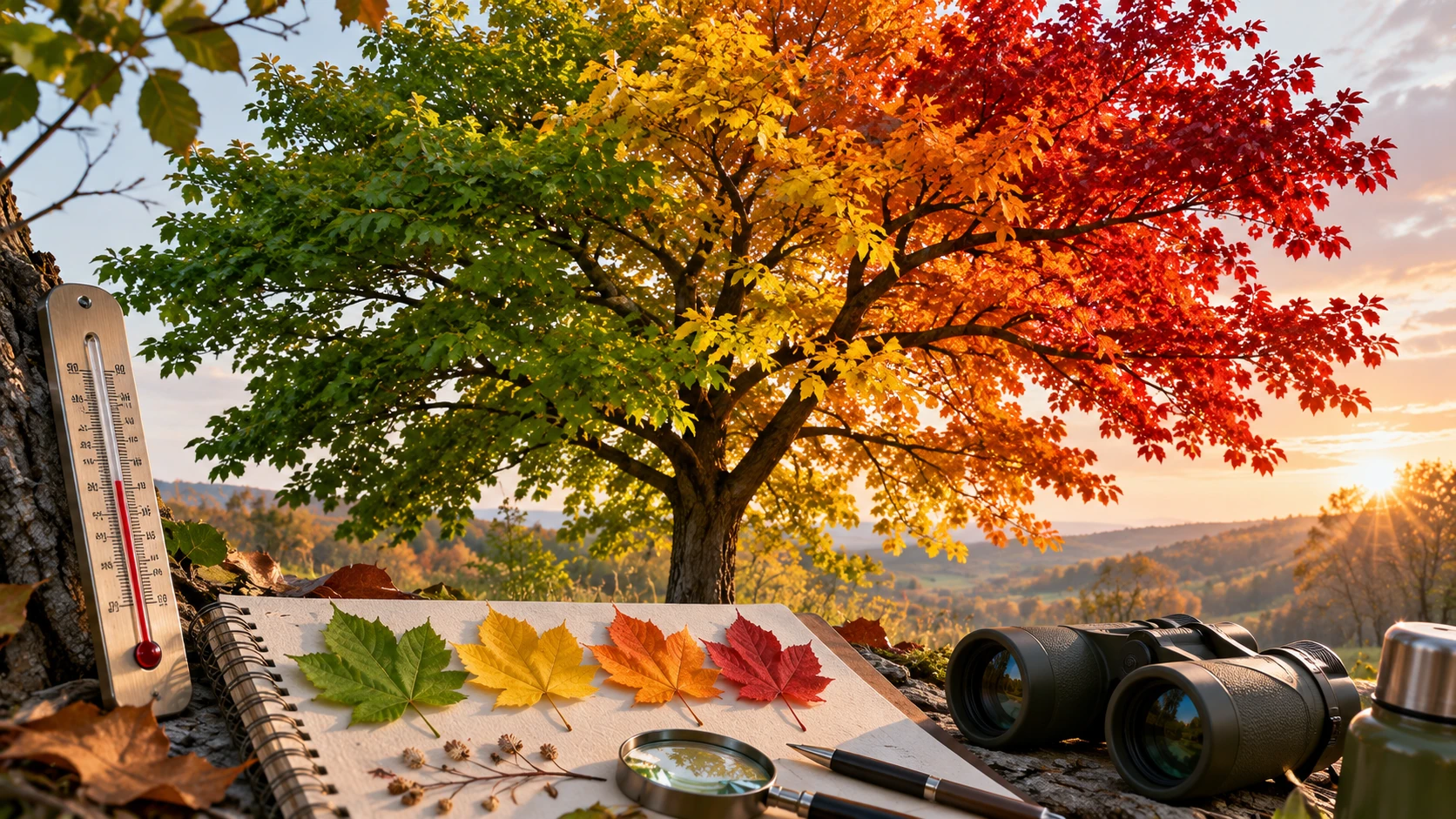
Autumn can look like a fixed calendar: days shorten, leaves yellow and forests turn red. Yet seasonal biology—phenology—is highly sensitive to climate change. Research published in 2026 shows that warming can alter the relationship between leaf coloration, the end of photosynthesis and the length of the growing season in complex ways.
Leaf color is not controlled by temperature alone. Day length, drought, the timing of spring and the traits of each species also shape the process. A warm autumn therefore does not produce the same response everywhere. Color may be delayed in some regions, brightness may change in certain plants, and the gap between visual color change and physiological shutdown may widen.
The shift also matters for tourism geography. In Japan, North America, Korea, China and parts of Europe, autumn foliage travel is a significant cultural and economic activity. If peak color moves later or becomes less predictable, travelers and destinations may need to plan the season more flexibly.
Phenology studies the timing of seasonal biological events such as leaf emergence, flowering, fruiting and leaf fall. Changes in temperature and rainfall can delay autumn coloration in some species, while drought or extreme heat may push the system in another direction. The biological answer to ‘when does autumn begin?’ is therefore increasingly determined by local climate and species response rather than by the calendar alone.