



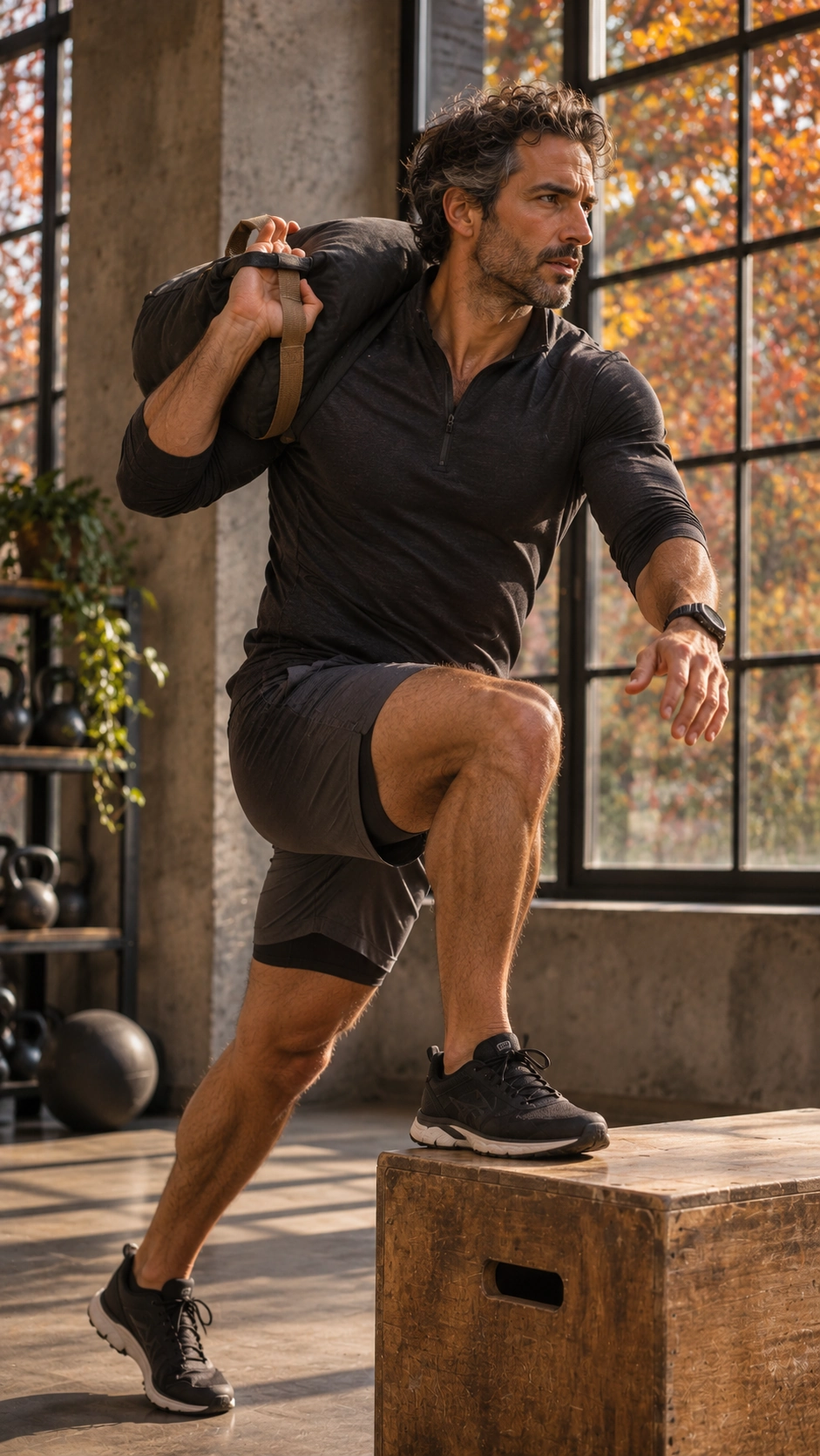
Functional fitness is gaining renewed attention in 2026, but less as a social-media display of complicated movements. The central idea is much simpler: in daily life the human body squats, rises from the floor, pushes, pulls, carries, rotates and walks. Training these basic patterns safely can convert gym performance into practical capacity.
Carrying grocery bags in one hand, lifting a suitcase onto a shelf, picking up a child or climbing a long staircase without becoming exhausted are small everyday performance tests. Farmer carries, squat variations, step-ups, rows, presses and controlled rotations are valuable precisely because they resemble these demands. Simpler exercise selection can also make progress easier to track.
The strength of the functional approach is its adaptability across age. A younger athlete may increase load and speed, while an older adult can use the same movement pattern with lighter resistance, support and greater balance emphasis. The goal is not to turn everyone into an athlete, but to make the movements required by their own life safer and less exhausting.
Some of the clearest measures of functional fitness are ordinary tasks rather than gym scores. Rising from the floor, carrying weight, changing direction, climbing stairs, pushing an object or walking for a long time require strength, mobility, balance and endurance to work together. Real-life fitness therefore focuses on movement patterns and independence rather than on a single muscle group.