


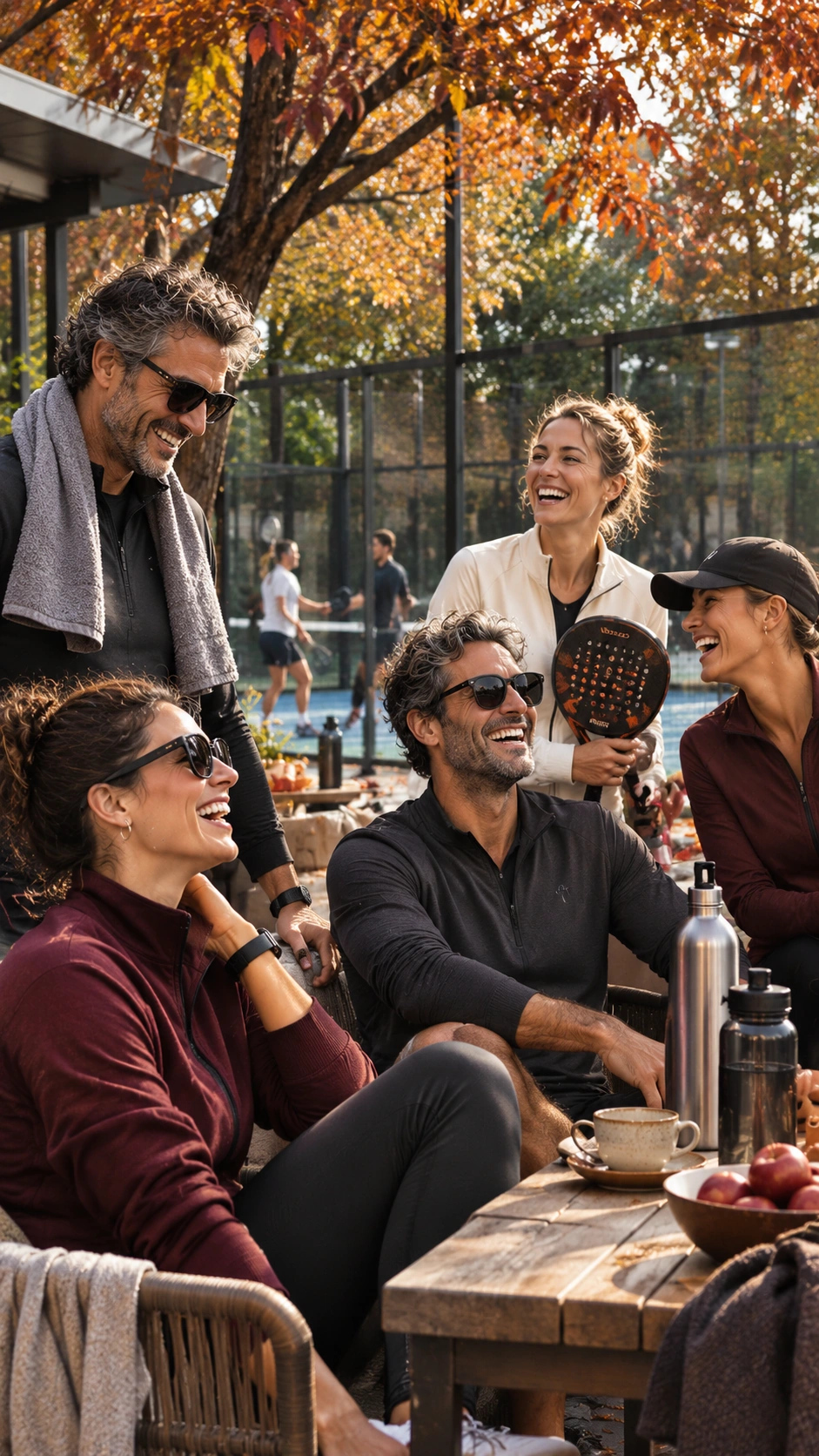
One of the notable fitness trends of 2026 is the rise of adult recreation and sports clubs. People increasingly want more than exercise; they want belonging. Running groups, racquet sports, swimming teams, amateur leagues and outdoor clubs respond to that need. The gym is slowly moving beyond the solitary world of headphones and becoming a social environment again.
The advantage is that motivation no longer depends entirely on willpower. Meeting other people at a set time turns training into a social appointment. Competition can be based less on elite performance and more on play, progress and consistent participation. At a stage of life when making new friends often becomes harder, sport creates a shared rhythm.
Padel, tennis, running, cycling, rowing, dance and team games are therefore drawing renewed interest across age groups. The community element is most valuable when it does not become excessive competition. Programmes still need to respect injury history, fitness level and recovery, and social pressure should not push people beyond their capacity.
The rise of adult recreational sport is driven as much by belonging as by performance. Running clubs, padel groups, amateur cycling teams and social leagues turn exercise into a recurring social appointment. Consistency, skill learning and shared goals can make movement less dependent on individual willpower and more likely to become a lasting part of everyday life.