



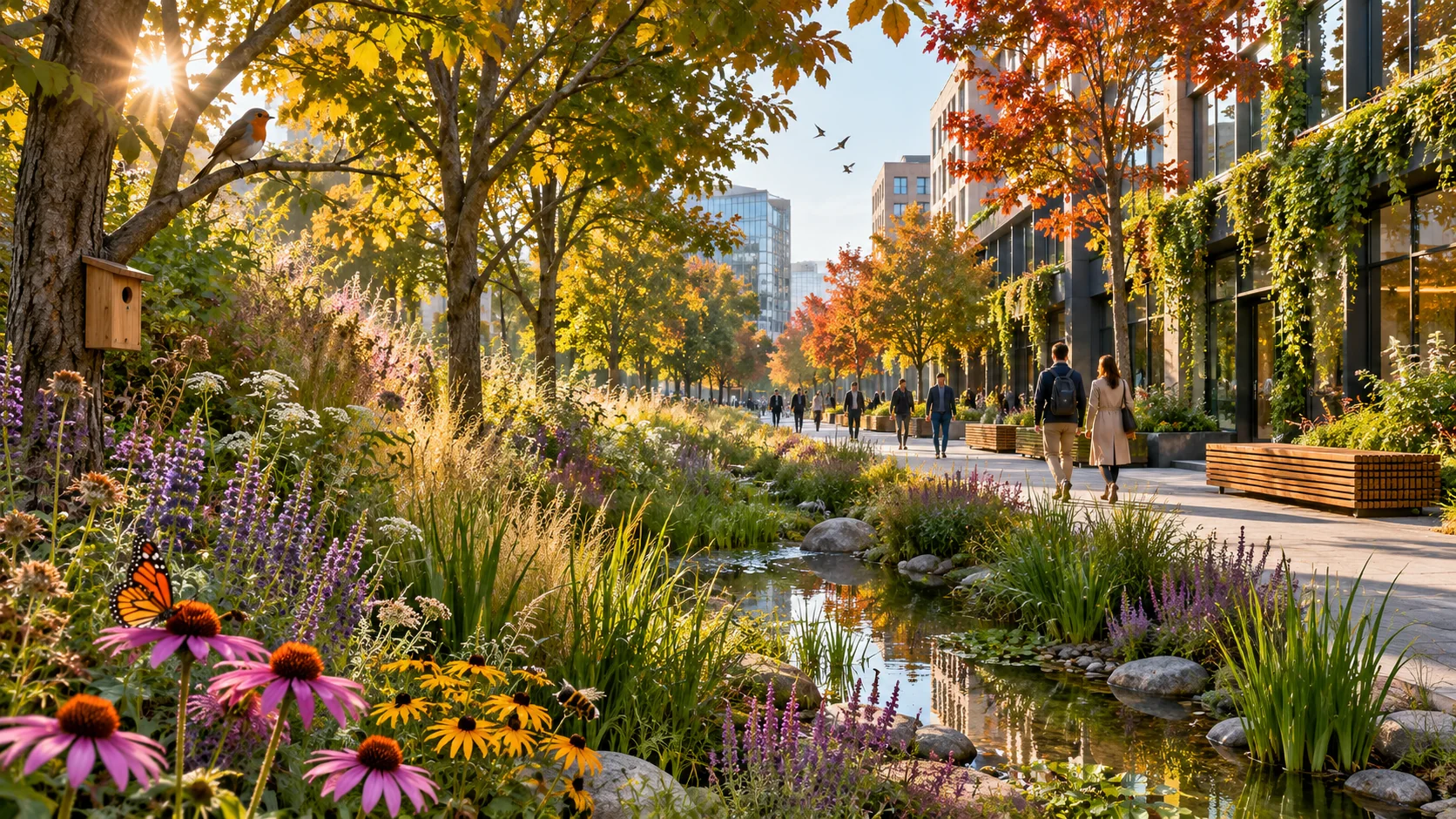
For a long time, urban nature was associated with trimmed lawns, aligned trees and controlled landscaping. In 2026, the idea of urban rewilding is challenging that aesthetic through spontaneous vegetation, less frequently mown meadows, rain gardens, native-species corridors and ecological reuse of neglected land. Nature in the city is increasingly treated not as decoration, but as a living system.
The aim of rewilding is not simply to leave every park unmanaged. It is to give ecological processes more room. Green networks that provide habitat continuity for insects, birds, small mammals and native plants can also support climate adaptation through shade, water retention and local cooling. The transition still requires thoughtful design, safety, accessibility and communication with communities.
One of the most interesting issues is aesthetic perception. People often read short grass as “cared for” and tall vegetation as neglected. Yet a certain degree of visual disorder can be valuable for biodiversity. The emerging urban aesthetic is learning to accept that nature is not always symmetrical, polished or clean.
Urban rewilding does not mean abandoning the city to nature; it means giving ecological processes more room to function. Native planting, connected green corridors, less frequently mown meadows, wetland restoration and stronger habitats for insects and birds are common tools. When successful, urban nature becomes more than decoration by supporting shade, water management, pollination and biodiversity.