


Beauty Has Always Wanted the Spotlight
From antiquity to the Renaissance, the body kept changing its language
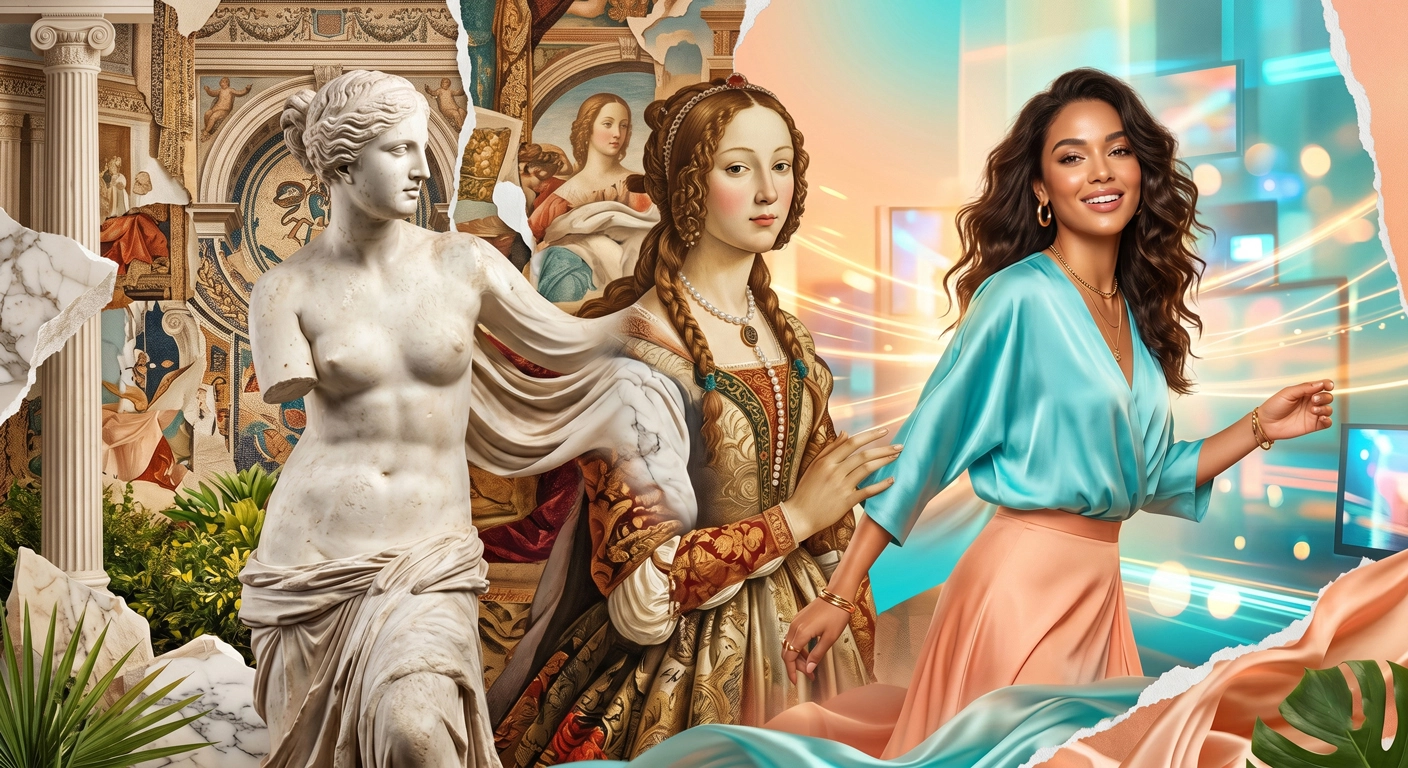
If we think beauty standards were invented by social media, we are giving Instagram far too much credit. Since humanity discovered the mirror, it has been reading, measuring, decorating and redefining the body.
Who owns the idea of beauty?
Beauty wants to be seen. It was true centuries ago, and it is still true today. A nose, a lip, a jawline or a facial contour is never just anatomy; it is a story written by time, culture, class and desire. Beauty is often described as something pleasing to the eye, but no century has answered that definition in the same way. Fullness once meant wealth and health; later it could be read as lack of discipline. Pale skin could signal nobility; tanned skin could become a sign of leisure and vitality. Beauty, then, is not a fixed formula. It is a social agreement, and sometimes a very moody one.
Harmony in the ancient world
In Ancient Greece, beauty was imagined through proportion and harmony between parts. The face could be read in three balanced zones: from hairline to eyes, from eyes to upper lip, and from upper lip to chin. Mathematics became a kind of aesthetic language. That idea still lives at the heart of plastic surgery. When we evaluate a face, there is no isolated nose, lip or eyelid; there is a rhythm of the whole. A good rhinoplasty does not simply “make the nose prettier.” It makes the nose belong to the face. A good rejuvenation procedure does not turn a person into someone else; it helps their own expression look more rested, balanced and alive.
“Trends pass. Proportion, harmony and character remain.”
The Middle Ages: too much mirror time was suspicious
During the Middle Ages, beautification could be treated with suspicion, associated with vanity, temptation or interference with the body as given by God. Cosmetics were morally complicated; anything beyond naturalness could look too worldly. Yet human beings still wanted to be seen. One delightful detail from the period is the obsession with male calves: tights, padded stockings and dramatic silhouettes were used to show them off. If “fit legs” make us think of Instagram today, Henry VIII’s famous calves are a useful reminder that the body has always been on stage. Only the costume changes.
The Renaissance: the body steps back into the light
With the Renaissance, the body — especially the female body — returned to the light of painting. Pale skin, blond hair, red lips, long slender hands, fuller bodies, smaller breasts and wider hips entered the visual vocabulary of beauty. Beauty was no longer only a dangerous seduction; it could also be read as the visible sign of inner goodness and social refinement. Makeup, powders, wigs, hair dyes and cosmetic recipes turned beauty almost into a manual. The fact that many of those manuals were written by men remains one of the great ironies of beauty history.
The lesson for plastic surgery
From antiquity to the Renaissance, the lesson is clear: aesthetic surgery is not the art of applying trends. Trends pass. Proportion, harmony, character and a person’s relationship with their own body remain. The role of the plastic surgeon is not to paste the taste of the era onto the body. It is to read the harmony already present in the face and body, then work with it safely and respectfully. Beauty is not created by a magic wand, like in a fairy tale. Often, it is the careful, measured and character-preserving visibility of what is already there. That is why looking at the history of aesthetics helps us understand the mirror before we ever look at the operating table.
From Corsets to Filters
How modern beauty found its way to the operating room
The corset, the bikini, the aerobics video, the supermodel, the filter… Every era has written a new script for the body. Plastic surgery became one of its most visible, and most misunderstood, scenes.
Beauty moves from the home to the shop window
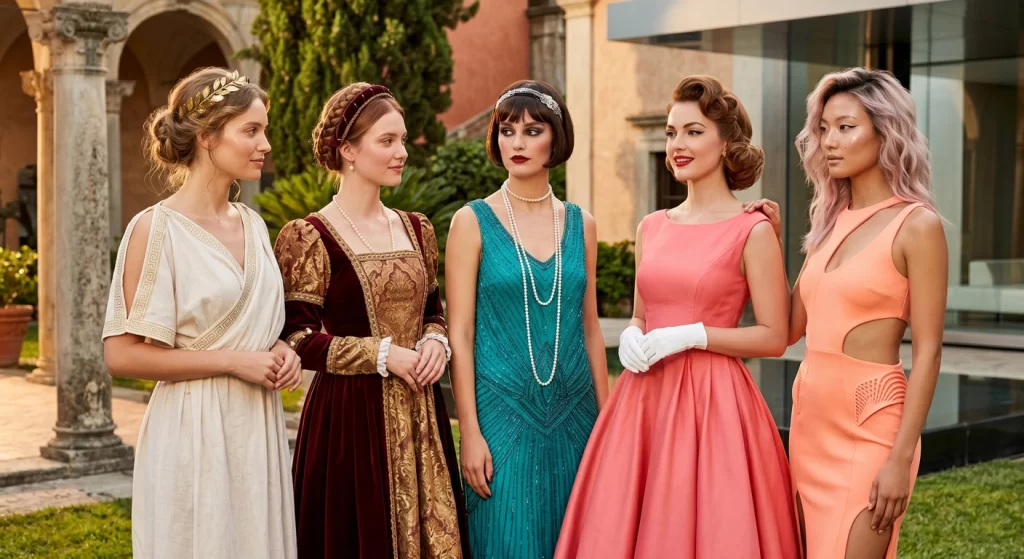
In the 18th and 19th centuries, beauty moved from courts to urban life, from the home to the department store, from private ritual to public display. Breath-stealing corsets for a tiny waist, structured garments that separated and shaped the breasts, careful avoidance of the sun to preserve pearly skin — the body was no longer merely personal. It had become part of status, visibility and social performance. As the cosmetics industry expanded the language of “beauty products” and “beauty care,” the body slowly became a project. The sentence we often hear in clinics today — “I just want to look a little better” — has roots in this modern beauty marketplace.
From curve-free freedom to hourglass icons
In the 1920s, short hair, a flat stomach, small breasts and undefined curves came forward. Women loosened the strings of the corset and embraced a more mobile silhouette. In the 1930s and 40s, Hollywood entered the room with blondes, redheads, polished makeup and athletic femininity. In the 1950s, curves returned with Marilyn Monroe: a small waist, fuller breasts and hips were applauded again. History shows us that body trends can change almost as quickly as fashion. What was hidden yesterday is highlighted today; what was enlarged yesterday may be minimized tomorrow.
“A face created on a screen in seconds can become a permanent expectation in the clinic.”
The calendar of thinness, muscle and perfection
The 1960s, shaped by the Twiggy effect, celebrated extremely slim silhouettes, mini skirts and false lashes. The 1970s brought tanned skin, natural hair and a more relaxed idea of the body. The 1980s became the age of aerobics, running and supermodels: long legs, fit bodies and big hair. In the 1990s, the pale, thin, distant look associated with Kate Moss and “heroin chic” became iconic. None of these shifts were innocent. Media, advertising, fashion and social circles continuously redraw our body image. We do not look only into the mirror; we also look into what we imagine others see.
The digital age: filtered faces, real anxieties
After the 2000s, one side of beauty praised the flat stomach, thigh gap and Victoria’s Secret aesthetic, while another side brought hips back through the influence of Jennifer Lopez, Shakira and later the Kardashian silhouette. Then came Instagram, YouTube and filters. The nose became a little slimmer, the chin sharper, the skin smoother, the eyes larger. A face created on a screen in seconds can become a permanent expectation in the clinic. For that reason, contemporary aesthetic surgery must understand not only anatomy, but also the psychology of the digital age.
The real relationship with plastic surgery
Interest in aesthetic surgery did not grow because of social media alone. Human beings have always negotiated with the body. What is new is the speed of that negotiation and the visual pressure surrounding it. A good aesthetic consultation therefore does not begin with “Which celebrity should we resemble?” The better question is: What do this person’s anatomy, age, tissue quality, expression and expectations tell us? Sometimes the best result is a small touch. Sometimes it is no procedure at all. If a filter-free world is possible, it is not a world where everyone looks the same. It is a world where people look closer to themselves — calmer, more original and more at ease. The history of aesthetics whispers exactly that: beauty is not a single mold, but a journey toward one’s own harmony within changing times.