



Let’s talk about the reason why the men with bandages on their heads we see at airports come to Istanbul.
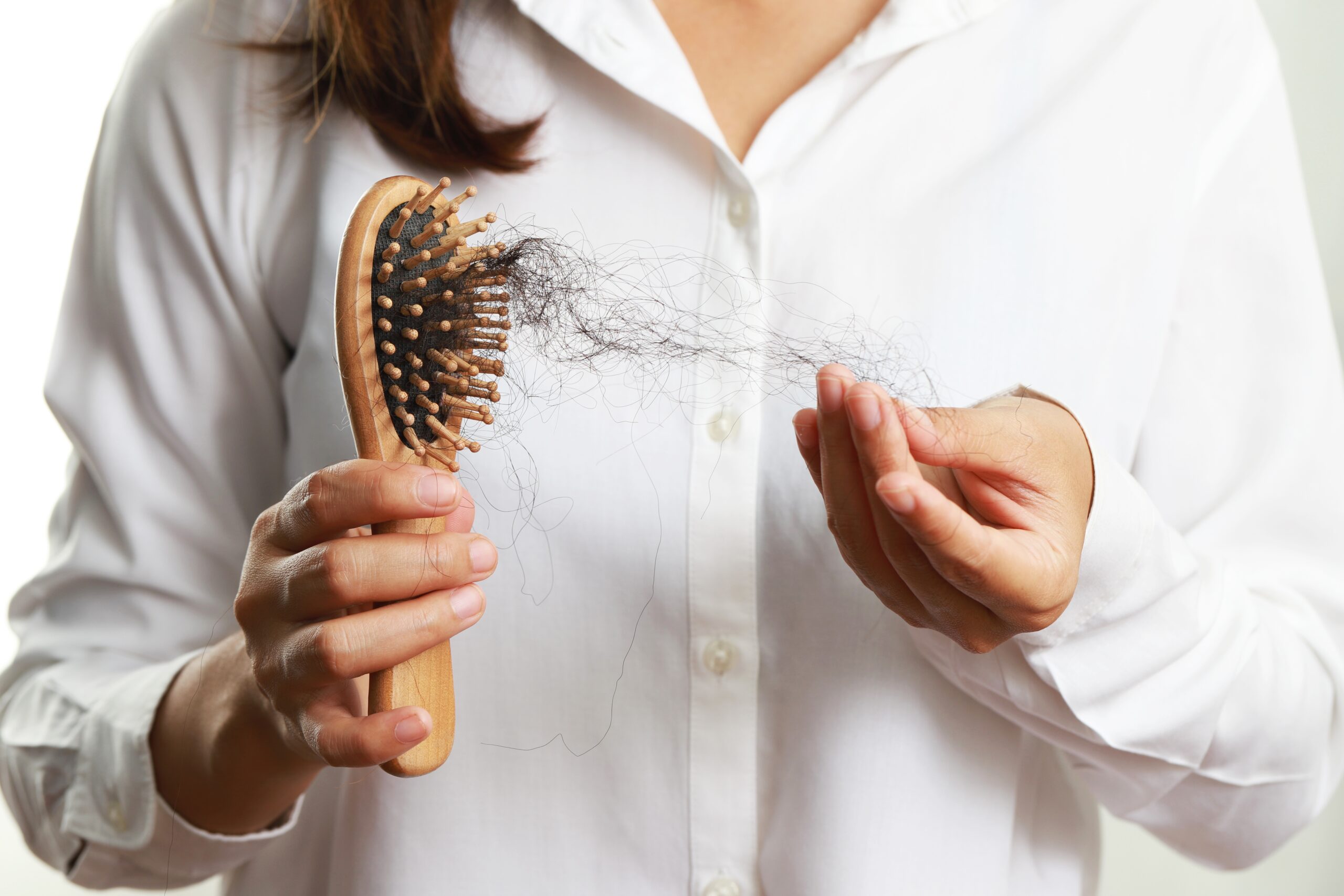
WHAT IS HAIR LOSS?
In fact, our hair falls out every day throughout life. It is normal for a person to lose about 100–150 hairs each day. In an average of 8-10 weeks, these shed hair strands are replaced by new ones. Nevertheless, mostly due to hereditary factors, nutrition, stress, life habits, imbalances in hormonal and mineral levels in our body, hair loss may increase and turns out to be a disease, a problem. The shedding may occur gradually in the process or it may be observed suddenly in a certain period. This varies from person to person.
WHAT ARE THE MOST COMMON CAUSES OF HAIR LOSS?
The most common cause of hair loss is hair loss due to genetic reasons, also called “Androgenic Alopecia”, that is, male pattern hair loss. This type of hair loss is mostly seen in men and, to a lesser extent, in women. There are two types of male pattern hair loss.
The first is the type that starts early, in the 20s.
Another is the type that starts late, in the 40s.
According to studies, the earlier the hair loss begins, the more excessive it will be.
To put it another way, the sooner the hair loss begins, the more hair loss there will be.
If you have a hair loss problem, whichever term you use, it implies you have the genes that cause your hair follicles to shrink and finally fall out. Hair follicles start to shrink in adolescence and early youth. Hereditary hair loss starts from the temples and the crown more in men, whereas it is observed more in the crown area in women. Again, in some skin diseases, irreversible permanent hair loss may develop. Some diseases that cause hormone irregularities, such as thyroid diseases, can also cause hair loss. Hair loss can be observed in women due to differences in hormone levels during pregnancy. However, this is mostly temporary. One of the most common causes of hair loss, particularly in women, is anemia. It is possible to stop hair loss with anemia treatment. Lack of minerals such as iron and zinc in the body can lead to hair loss. In such cases, it may be possible to stop hair loss by taking mineral supplements. Some life habits can also cause hair loss. Inadequate and irregular nutrition, inactivity, and stress are examples of these factors.
Another cause of hair loss is bad hair care habits. Examples include constantly, tying the hair tightly, improper washing, and exposing hair to chemicals.
CAN WE PREVENT HAIR LOSS?
If hair loss is not hereditary, that is, if it is due to a disease, a hormonal situation or a lack of vitamins and minerals, there is treatment for this type of hair loss. Hair loss is reduced when the underlying cause is addressed, and new hair growth is achieved with treatment. However, it is necessary to start treatment before the problem progresses.
First of all, eating healthy and consuming food that contain ingredients that will nourish the hair is important.
Speaking of nutrition is important, let’s talk about foods that are good for hair health.
Consumption of folic acid-containing cereals such as broccoli, corn, green foods rich in Omega-3 such as purslane, and red meat rich in iron are good for hair health.
Coenzyme Q10 rich in antioxidant, fatty acids like omega 3, products rich in amino acids like lysine with tissue-healing properties, especially vitamins like B12, B5, E, D, and Biotin, as well as trace elements like selenium and zinc, all help to prevent hair loss and nourish the hair.
WHAT DO WE DO IN THE TREATMENT, IF HAIR LOSS CONTINUES?
If your hair is still falling out and we can not get result from the treatment, the solution will be HAIR TRANSPLANTATION.
Hair transplantation is currently the most effective method in hair loss and hair shedding treatment in the world.
Aside from that, there are treatments that can help with hair transplantation, but none are as effective as hair transplantation.
We mostly apply these type of treatments in patients with hair transplantation, and in this way, we achieve stronger, more effective and more successful results.
WHAT ARE THE HAIR STRENGTHENING TREATMENTS OTHER THAN HAIR TRANSPLANTATION?
We recommend PRP, mesotherapy, bioactive nano-molecular and stem cell treatments that we apply to the hair follicles to support the hair transplantation process.
When these treatments are combined with hair transplantation, they give very successful results.