

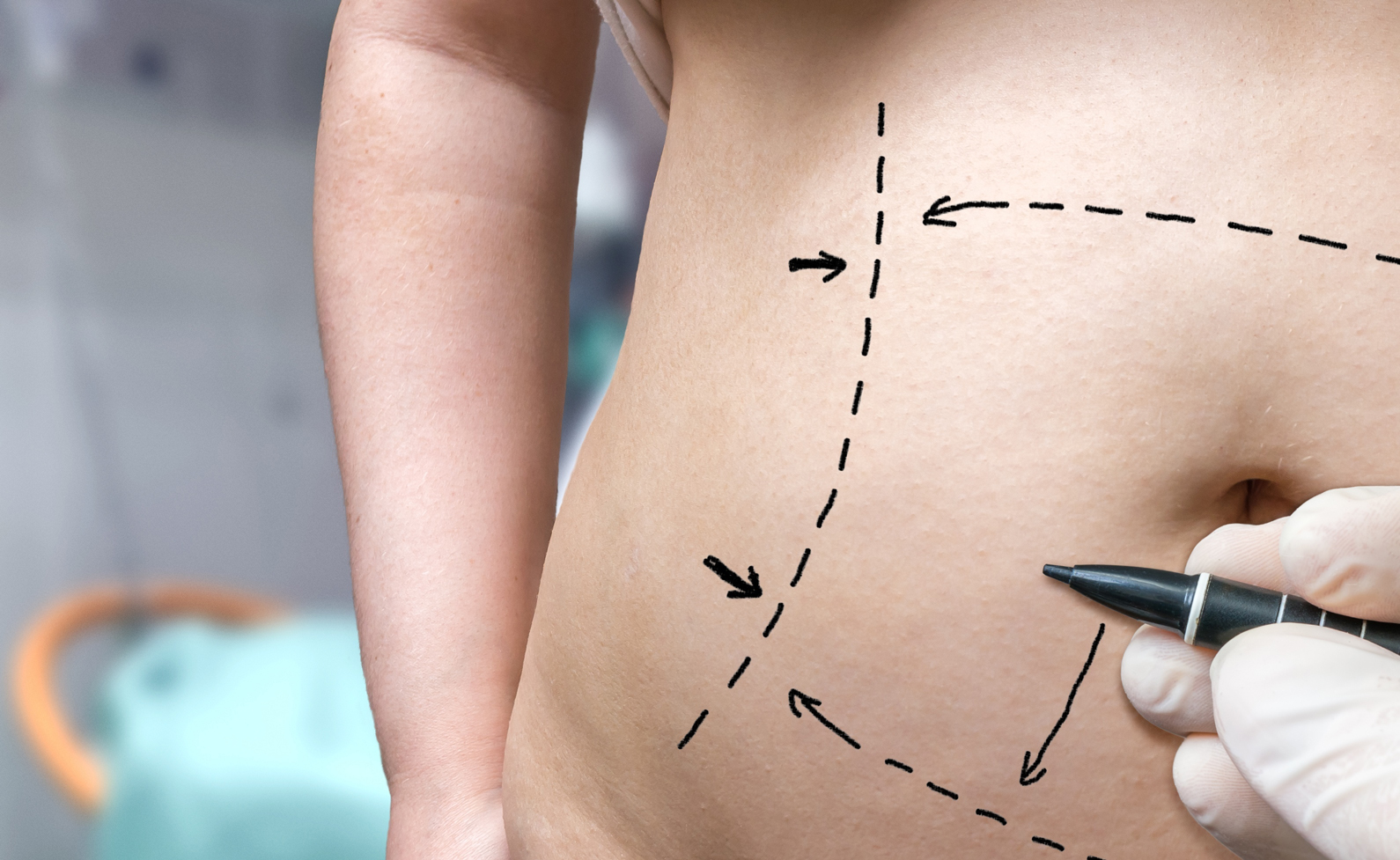
Birth, weight gain and loss, rapid transformation after gastric sleeve surgery, or the quiet passage of time… The abdominal area can sometimes carry the body’s story in its most visible form. A tummy tuck is not a procedure designed to erase that story; rather, it is a tailor-made body-contouring operation planned to restore a firmer, more balanced shape and to help the person feel freer in their own body.
Editorial usage note: The following question-and-answer sections have been prepared at a length that can also be adapted into approximately 60-second Reels/TikTok segments.
Vox Aesthetic: How would you explain tummy tuck surgery in its simplest form?
Dr. Serdar Bora Bayraktaroğlu: A tummy tuck, medically known as abdominoplasty, is the removal of loose, sagging excess skin from the abdominal area, the reduction of excess fat when needed, and the tightening of the abdominal wall into a more supportive line. We most often see this need after pregnancies, major weight fluctuations, rapid weight loss following gastric sleeve surgery, or the gradual loss of skin elasticity over time. The purpose is not to make the patient lose weight; it is to correct the laxity left behind after the body has changed and to make the abdomen flatter, firmer, and more harmonious with the body as a whole.
Vox Aesthetic: Why do exercise and diet sometimes fail to tighten the abdomen?
Dr. Serdar Bora Bayraktaroğlu: Exercise strengthens the muscles, and proper nutrition reduces body fat; however, skin that has lost its elasticity may not always shrink back on its own. After significant weight loss, the abdominal skin can become loose, almost like a deflated balloon. In such cases, doing more exercise or losing more weight may not solve the sagging. In fact, if fat is removed while the skin remains lax, the loose appearance may become even more visible. This is where tummy tuck surgery becomes a surgical procedure of form restoration.
Vox Aesthetic: Who is a suitable candidate for a tummy tuck?
Dr. Serdar Bora Bayraktaroğlu: The ideal candidate is someone in good general health, whose weight has stabilized, and who has abdominal skin laxity or looseness of the abdominal wall. This surgery should be based on the patient’s own motivation and realistic expectations. We do not usually recommend abdominoplasty while a person is still actively losing weight, because ongoing weight change may alter the result. Smoking, certain chronic illnesses, and any condition that may affect healing must also be assessed. In other words, the decision is not made by looking in the mirror alone; examination findings, medical history, and expectations must all be considered together.
Vox Aesthetic: What is the right timing after gastric sleeve surgery or major weight loss?
Dr. Serdar Bora Bayraktaroğlu: After major weight loss, the most important point is that the weight has stopped changing and has remained stable for a period of time. If the patient is still losing weight rapidly, the abdominal skin and body proportions will continue to change, which may affect the surgical outcome. For patients who have undergone gastric sleeve surgery or experienced dramatic weight loss, we prefer to wait until they are close to their final weight and the body has settled into its new balance. A tummy tuck usually belongs not to the beginning of the weight-loss journey, but to the body-contouring stage that follows it.
Vox Aesthetic: Why may the abdomen fail to return to its previous shape after childbirth?
Dr. Serdar Bora Bayraktaroğlu: During pregnancy, it is not only the skin that stretches; the midline of the abdominal muscles may also separate and loosen. In medical terms this is called diastasis recti; in plain language, we can describe it as the opening of the abdominal muscles. Even in a slender patient, the abdomen may still appear rounded or protruding. Stretch marks, skin laxity, and folding in the lower abdomen may also develop after childbirth. In such cases, removing fat alone may not be enough; the abdominal wall may also need to be repaired. If future pregnancy is planned, the timing of surgery should be discussed accordingly.
Vox Aesthetic: Can liposuction replace a tummy tuck?
Dr. Serdar Bora Bayraktaroğlu: Liposuction is a fat-removal procedure; it does not cut away excess skin. If the abdomen has only limited fat accumulation and good skin quality, liposuction can create a beautiful slimming effect. However, if the skin is sagging, deflated, folded, or if the abdominal wall is loose, liposuction alone cannot achieve the result of a tummy tuck. In a very lax abdomen, removing fat alone may even make sagging more noticeable. This is why we determine during examination whether the patient needs liposuction, abdominoplasty, or a combination of the two.
Vox Aesthetic: What is the difference between a mini tummy tuck and a full tummy tuck?
Dr. Serdar Bora Bayraktaroğlu: A mini tummy tuck is generally preferred for patients whose sagging is limited mainly to the area below the belly button. In this operation, the belly button usually does not need to be recreated. In a full tummy tuck, both the upper and lower abdomen are assessed; excess skin is removed, the abdominal wall is tightened if necessary, and the belly button is brought through the newly tightened skin in a natural-looking position. In some patients who have experienced very extensive weight loss, broader planning may be required. So it is not the name of the operation, but the patient’s abdominal anatomy, that determines the plan.
Vox Aesthetic: What do we mean by lipo-abdominoplasty?
Dr. Serdar Bora Bayraktaroğlu: Lipo-abdominoplasty means adding liposuction to a tummy tuck. Removing excess skin alone is sometimes not enough; fat deposits around the waist, flanks, and upper abdomen can also affect body proportions. In the right patient, we can refine these areas with methods such as Vaser liposuction and then tighten the abdominal skin and abdominal wall. The goal is not merely a flat abdomen, but a more defined waistline, a more elegant abdominal contour, and a result that blends naturally with the rest of the body.
Vox Aesthetic: Why must a tummy tuck plan be personalized?
Dr. Serdar Bora Bayraktaroğlu: Because no two abdomens are the same. In one patient, the main issue may be excess skin; in another, fat accumulation may be more prominent. Another patient may have loosened abdominal muscles, or an old C-section scar that changes the planning. Skin quality, the location of stretch marks, the shape of the belly button, waist proportions, and even the patient’s clothing preferences can influence the surgical design. The level at which the incision can be hidden, whether liposuction should be added, and whether abdominal wall repair is needed are all decided during examination. This is not a standard operation; it requires a tailor-made plan.
Vox Aesthetic: What should a patient expect on the day of surgery?
Dr. Serdar Bora Bayraktaroğlu: A tummy tuck is performed under general anesthesia, so the patient does not feel pain during the operation. We usually plan the incision low on the abdomen, in a line that can be concealed within the bikini or underwear line. Excess skin is removed, fat tissue is reduced if necessary, and the abdominal wall is tightened when indicated. In a full tummy tuck, the belly button is shaped and positioned to look natural. The duration of surgery varies according to the patient’s needs and any combined procedures, but in most cases it is a several-hour operation. Afterwards, the patient is monitored safely and usually stays in the hospital under observation for one night.
Vox Aesthetic: What does abdominal wall repair mean?
Dr. Serdar Bora Bayraktaroğlu: We can think of the abdominal wall as the body’s internal corset. Pregnancy, weight changes, and aging can cause this internal support system to loosen. If we see separation or laxity of the abdominal muscles during examination, we repair this line during surgery to create firmer internal support. This is not simply tightening the outer skin; it also helps the abdomen stand more smoothly from within. It is not required in every patient, but when it is needed, it is a very important step for the quality of the result.
Vox Aesthetic: Why is the belly button so important in a tummy tuck?
Dr. Serdar Bora Bayraktaroğlu: The belly button is the central landmark of abdominal aesthetics. No matter how flat and firm the abdomen is, if the belly button does not look natural, the result may appear artificial. In a full tummy tuck, the belly button is not moved like a separate object; rather, the abdominal skin is repositioned and a natural opening is created for the belly button. The aim is to achieve a small, elegant, softly shadowed shape that is harmonious with the body. In a mini tummy tuck, the belly button usually does not need to be altered.
Vox Aesthetic: Does a tummy tuck remove stretch marks as well?
Dr. Serdar Bora Bayraktaroğlu: This is one of the most frequently asked questions. A tummy tuck is not a procedure that erases all stretch marks. However, if stretch marks are located on the excess skin that is removed, those stretch marks are removed along with that skin. This is more commonly possible for stretch marks below the belly button. Stretch marks on the upper abdomen or on skin that remains in place do not disappear completely; however, because the abdomen becomes tighter and smoother, the overall appearance can look more refined. Setting realistic expectations before surgery is very important here.
Vox Aesthetic: Will there be a scar, or can it be completely hidden?
Dr. Serdar Bora Bayraktaroğlu: A tummy tuck is not a scarless operation; it is important to say this honestly from the beginning. However, in most patients, the scar is planned along a line that can be hidden within underwear or bikini bottoms. It may be more visible during the first months; over time, its color fades, the tissue softens, and it becomes less noticeable. Scar quality depends on the person’s skin structure, genetics, smoking status, wound care, and healing process. The aim is not to pretend the scar does not exist, but to place it in the right line and to create an abdominal form strong enough to make that scar meaningful.
Vox Aesthetic: What are the first few days after surgery like?
Dr. Serdar Bora Bayraktaroğlu: A feeling of tightness in the abdomen is expected during the first days. We generally monitor the patient in the hospital for one night. While resting, the back is slightly elevated and the legs are gently bent; while walking, the patient may stay slightly bent forward for the first days to avoid tension on the incision line. Thin tubes called drains may be placed to remove fluid that could collect inside the abdominal area. A compression garment supports the abdomen and helps control swelling. This period is one of patience, proper care, and controlled movement.
Vox Aesthetic: When can daily life resume?
Dr. Serdar Bora Bayraktaroğlu: This varies according to the extent of the procedure, the patient’s job, and the pace of healing. In general, the first week is a period of rest and controlled movement. Many patients can return to light daily activities after about a week; desk work may allow an earlier return, while physically demanding jobs may require more time. During the first weeks, heavy lifting, straining the abdominal muscles, and sudden movements should be avoided. Gentle exercises that do not involve the abdominal wall can usually begin after several weeks, while full sports activity should wait until the doctor gives approval.
Vox Aesthetic: Why is the compression garment so important?
Dr. Serdar Bora Bayraktaroğlu: The compression garment provides controlled support to the abdominal area after surgery. It helps swelling distribute more evenly, supports the tissues as they settle into their new position, and allows the patient to feel more secure. However, the garment alone does not create the result; the right surgical plan, the right technique, and the right recovery process work together. The duration of garment use may vary from person to person. We explain to each patient in detail how long, how often, and at which stage it should be used.
Vox Aesthetic: What should patients expect regarding pain, swelling, and numbness?
Dr. Serdar Bora Bayraktaroğlu: There is no pain during surgery because the patient is under anesthesia. Afterwards, the main sensation is often tightness or pulling rather than severe pain, and these feelings are controlled with medication. Edema, or swelling, is a natural part of the healing process and decreases over the weeks; the final appearance may take months to settle. Temporary numbness or changes in skin sensation over the abdomen may also occur. Patients should not rush this process. After a tummy tuck, it is better to look at the mirror with trust in time rather than with daily impatience.
Vox Aesthetic: When do the results settle?
Dr. Serdar Bora Bayraktaroğlu: Immediately after surgery, the patient can see that the excess tissue has been removed; however, this is not the final result. In the first weeks, swelling, tightness, and difficulty standing fully upright can affect the appearance. Over the weeks, the abdomen relaxes and the body adapts to its new contour. Scar fading and full softening of the tissues take longer; in most patients, meaningful improvement is seen gradually over the months. This is why patience is very valuable in tummy tuck surgery. The result is not something that appears in a single day; it is something that matures over time.
Vox Aesthetic: Is a tummy tuck permanent?
Dr. Serdar Bora Bayraktaroğlu: Excess skin removed during a tummy tuck does not come back, so the result can be enjoyed for many years. However, the body continues to live and change. Aging, weight gain and loss, pregnancy, and lifestyle habits can affect the outcome. This surgery should be seen not as a final stop, but as a new beginning. Maintaining a stable weight, moving regularly, eating well, and caring for the skin all help preserve the result. A well-planned tummy tuck can be a powerful body-contouring procedure that accompanies the patient’s body for many years.
Vox Aesthetic: Can a tummy tuck be combined with other operations?
Dr. Serdar Bora Bayraktaroğlu: Yes. In suitable patients, a tummy tuck can be planned as part of a broader body-contouring approach. The waist and abdominal line can be refined with Vaser liposuction; in some patients, it can also be combined with breast surgery or other aesthetic procedures. However, not every combination is right for every patient. Operation time, blood values, general health, healing capacity, and safety limits must be evaluated together. In aesthetic surgery, doing more procedures does not always mean a better result. The key is to choose the right combination for the right patient within safe boundaries.
Vox Aesthetic: What do patients most often say has changed after this surgery?
Dr. Serdar Bora Bayraktaroğlu: What I hear most often is that clothing freedom returns. The patient no longer constantly thinks about hiding the abdomen, feels more comfortable in fitted dresses, and carries the body with greater ease at the beach or on special occasions. This is not only about having a flatter abdomen in the mirror; body image, posture, and social comfort may also change. Of course, surgery does not promise perfection to anyone. But in the right patient, with the right expectation, it can create a very powerful sense of relief in the person’s relationship with their own body.
Vox Aesthetic: What would you like to say finally to those considering a tummy tuck?
Dr. Serdar Bora Bayraktaroğlu: A tummy tuck is not a procedure to decide on hastily. First, you need to understand what you truly want; then you need to evaluate what your body actually needs with a specialist. The aim of this surgery is not to resemble another body, but to move closer to a more balanced, firmer, and freer version of your own. The scar, recovery process, compression garment, swelling, and patience are all part of this journey. When planned correctly, a tummy tuck is a highly effective operation that can refine not only the abdomen, but also the way a person looks at the mirror.