



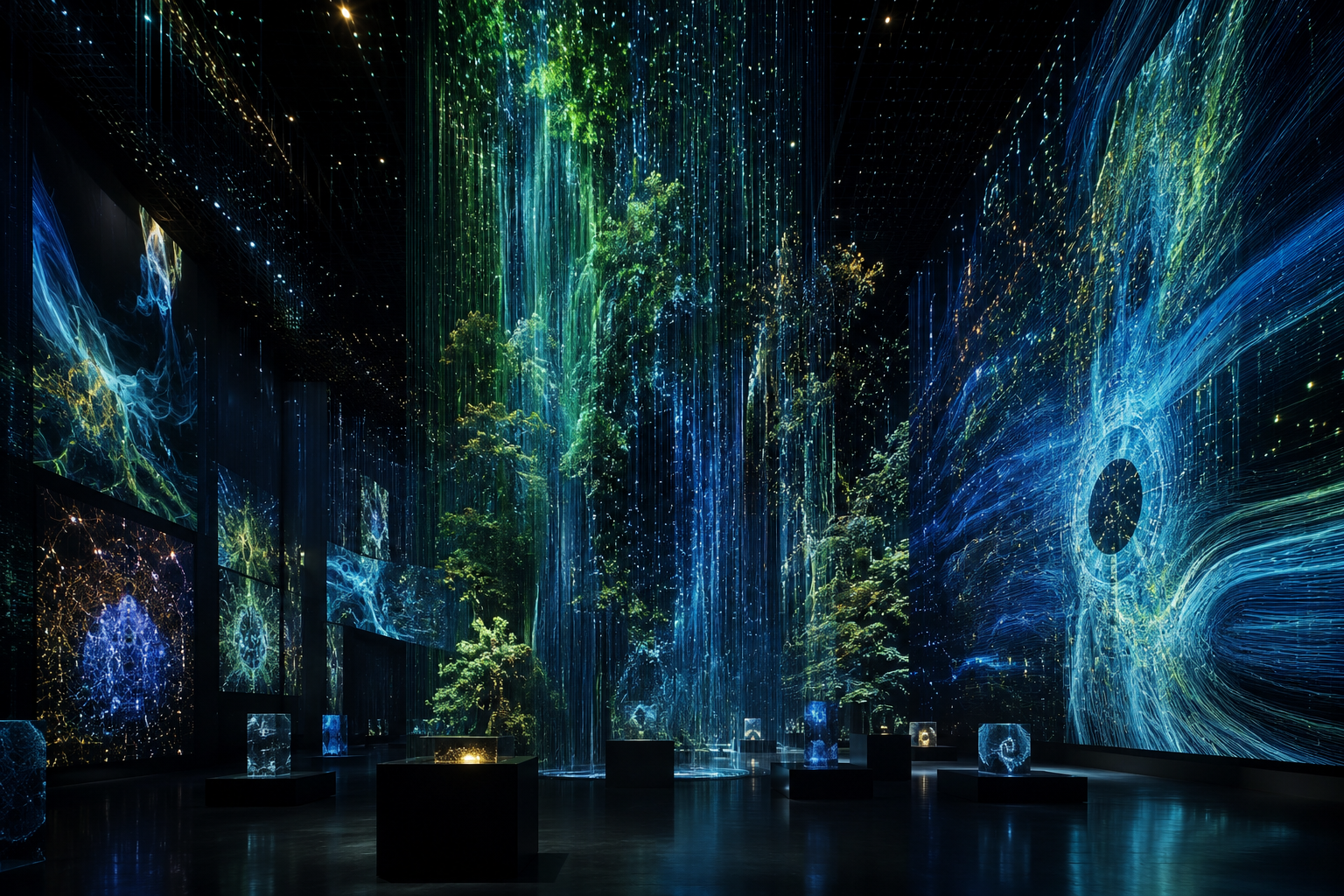
Opening in Los Angeles, Dataland brings artificial intelligence art into the scale of a museum, raising new questions about creativity, ethics, and the human touch.
Throughout art history, every new technology has first been met with suspicion. Photography was once imagined as the end of painting. Cinema was seen as a rival to theatre. Digital art, for a long time, lived under the shadow of the question: “Is this truly art?” In 2026, a similar debate is unfolding around artificial intelligence.
Opening in Los Angeles on June 20, 2026, Dataland describes itself as the world’s first museum dedicated to artificial intelligence arts. Its inaugural exhibition will be “Machine Dreams: Rainforest.”
According to Smithsonian Magazine, Dataland is an initiative founded by Refik Anadol and Efsun Erkılıç and will be located within The Grand LA complex in Los Angeles. The museum argues that art created through artificial intelligence is not merely a matter of images; rather, it can open onto multisensory experiences involving sound, video, text, scent, taste, and touch.
Yet the essential question remains: Can a machine dream? Or does it merely rearrange the archive of human memory into new forms? Is AI art a tool that expands human creativity, or is it a new system that risks automating the aesthetic experience itself?