
The rise of “cell-free” regeneration in rejuvenation
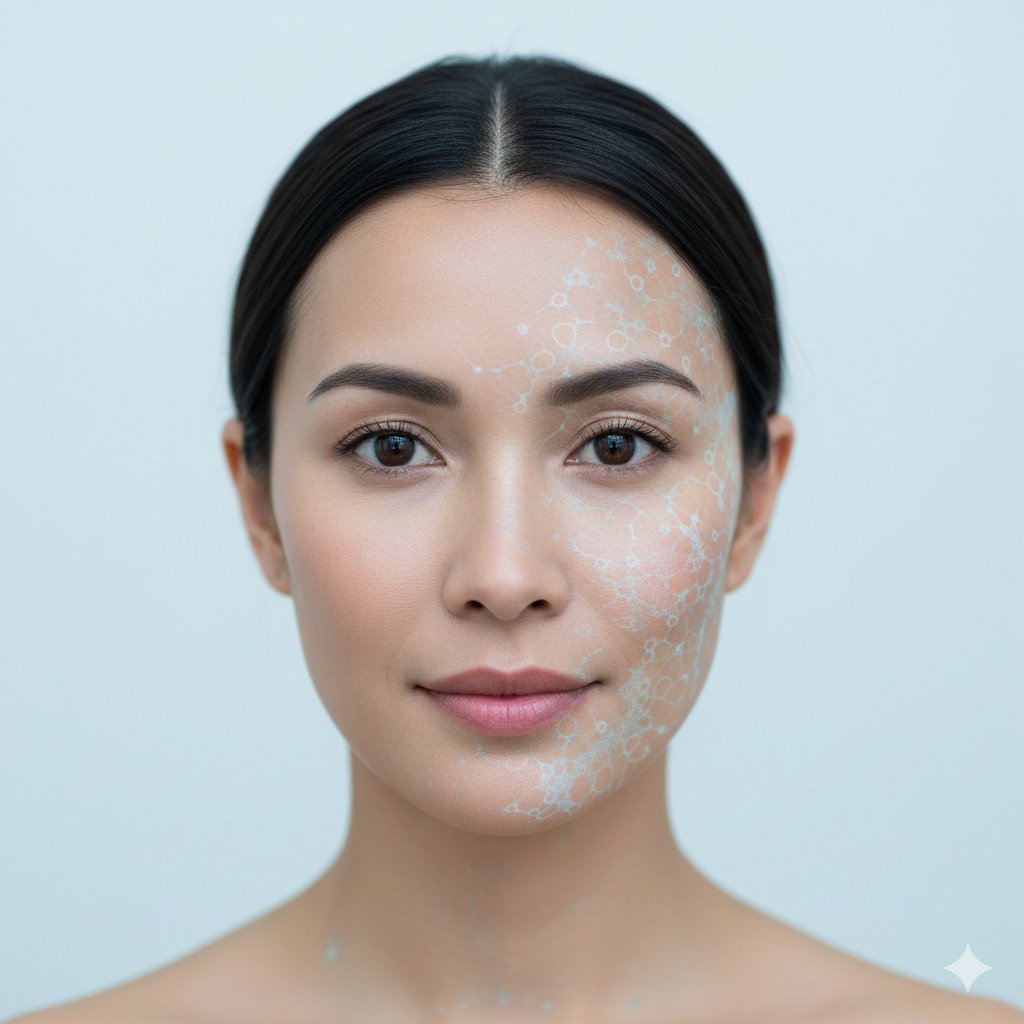
Rejuvenation is no longer only about a skin that looks “tighter” or “smoother.” More and more, the goal is to support tissue quality, elasticity, and resilience over the long term. I see this shift as the meeting point between the surgical power of plastic surgery and the finesse of regenerative medicine: rejuvenation with stem cells and exosomes – where science and art intersect.
In my clinic, this approach has two main pillars: stem cell-based applications and the exosome protocols we’re increasingly discussing. One speaks the language of “cell-based” renewal; the other, “cell-free.”
Stem Cells: What Do They Add When Combined with Surgery?
Especially when planned alongside surgical procedures such as a facelift, injections based on mesenchymal stem cells/ADSC obtained from adipose (fat) tissue aim to do more than provide volume support – they also aim to support skin quality and tissue biology.
The philosophy is simple: not only to “lift” the skin, but to place the tissue on a healthier foundation.
There is a strong scientific backbone built up over many years for stem cell-based applications. Studies reporting positive effects on collagen synthesis, elasticity, and microcirculation have made the regenerative approach increasingly visible in aesthetic surgery.
What Is an Exosome?
Exosomes can be thought of as micro/nano-sized “message parcels” that cells release to communicate with their environment. We’ve known for a long time that cells leave tiny packets behind; what we understand more clearly today is this:
Cells don’t only release “waste.” They also send small vesicles carrying proteins, growth factors, cytokines, and fragments of genetic material (such as RNA/miRNA) in order to influence other cells. These biological messengers are exosomes.
I sometimes explain it to my patients like this: an exosome is like a smart delivery from one cell to another. Depending on its payload, it can help trigger repair and renewal responses in the target tissue.
What Do Exosomes Do?
Exosomes have a broad spectrum of potential uses in medicine. Under the umbrella of regeneration, they are thought to hold potential especially in these areas:
- Wound healing and tissue repair
- Recovery after burns and trauma
- Hair-loss protocols
- Supportive applications against skin aging (anti-aging)
From the perspective of plastic surgery, I group this into two categories: 1) reconstructive use – supporting tissue healing in conditions such as wounds and burns; 2) aesthetic use – protocols aimed at skin quality, radiance, elasticity, and slowing visible signs of aging.
Exosomes in Aesthetics: What’s the Real Goal?
I don’t position exosome applications as a “miracle on their own,” but as a tool that can support the skin biologically when the right patient meets the right plan.
In aesthetics, the goals are usually:
- A greater sense of vitality and glow in the skin
- Support for overall tissue quality
- Contribution to improvement in fine lines and general elasticity
- Protocols that can help strengthen the skin barrier
There is an important distinction here: an exosome is not a magical procedure that turns an “old cell” into a “young cell” overnight. A more accurate description is that it offers biological support that encourages cells toward repair and renewal.
Safety and Standards: How Do I Approach It?
The exosome field is developing very rapidly. The most important need this speed creates is standardization – and transparency.
My core approach in practice is:
- Choosing products prepared to GMP standards
- Preferring sterilized, characterized systems with safety documentation
- Explaining clearly that this is not “cell-based (living cells)” but a “cell-free” application
- Discussing openly that long-term data and level of evidence can vary by indication and by product
For that reason, I consider exosomes not because they’re “trending,” but when I see the right indication – within the right protocol.
Who Is It Suitable For? How Many Sessions?
In applications like this, a “one age, one protocol” approach isn’t right. Still, in practice, a framework can look like this:
- In your 20s: protocols focusing on barrier support and vitality
- In your 30s-40s: a quality-preservation approach, slowing the pace of aging
- 50+: supporting regenerative capacity and discussing more intensive combinations
The number of sessions is planned according to need. Many people feel a more “alive” look even after the first application, but for a more noticeable effect, protocols of 2-3 sessions are often discussed. What determines this is the skin’s needs, any accompanying procedures, and individual biology.
Exosome, PRP, and Stem Cells: Are They the Same?
They’re often confused, so let’s clarify:
- PRP: obtained from the person’s own blood; its growth-factor content is relatively limited and can vary from person to person.
- Stem cell-based applications: what is transferred is living stem cells; this is a cell/tissue-based approach and may involve more invasive planning.
- Exosome: a “cell-free” approach that carries healing biological messages through extracellular vesicles.
I sum it up simply like this: I think of the stem cell as the apple tree – the source – and the exosome as the apple produced by that source: the message.
Mini FAQ
Short, clear answers.
Does an exosome increase collagen production, or support renewal? It’s more accurate to think of it as biological support that aims for both: supporting tissue quality while encouraging renewal responses.
Can it be used for people with a weakened skin barrier? With the appropriate protocol, it can be considered in patients where barrier support is a goal – but in sensitive skin, the decision should be made after examination and an assessment of the skin’s current condition.
Is it an alternative to PRP in hair loss? Some studies and clinical experience report stronger responses compared with PRP in certain protocols, but it wouldn’t be accurate to claim it is “definitively superior” for everyone. Hair type, cause of shedding, and duration are decisive.
Is exosome therapy the same as stem cell therapy? No. Stem cell approaches use living cells; exosomes are biological carriers secreted by cells.
Final Word
As I also note in my book “FİLTRESİZ BİR DÜNYA MÜMKÜN” (A Filterless World Is Possible), the future of rejuvenation will most likely be hybrid protocols: individualized plans that combine the strong effect of surgery with the fine-tuning of regenerative medicine. Exosomes are a new and exciting part of that story.
My aim is clear: rejuvenation that looks natural, looks healthy, and is supported sustainably. Because true aesthetics doesn’t only care about appearance – it also values the tissue’s biological quality.