



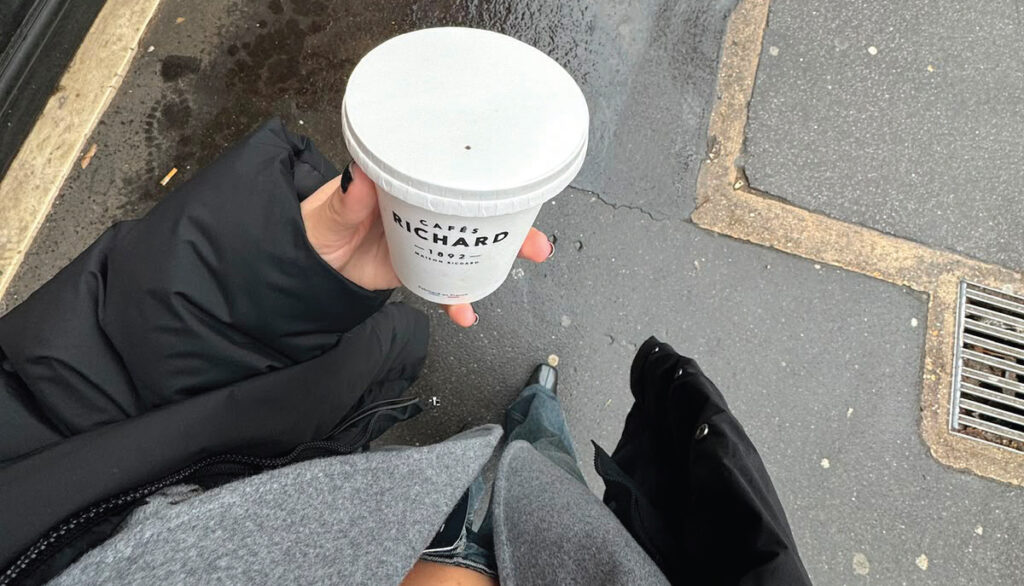
That sharp cold you never quite see in photographs, yet feel the moment you set foot in the city… Paris’s dry chill hits me in the face on the very first morning. I walk with a warm croissant and coffee from the bakery in hand. As the heat of the croissant slowly fades between my fingers, I find myself blending into the city’s morning rush.
The damp, old-stone smell on the steps leading down to the Métro; the high-pitched metallic screech of the train against the rails; people hurrying past dirty tiled walls, their faces buried deep in the collars of their coats…
For me, those underground stations are always the first places that remind me that the city is not made up of postcards alone—that it carries its own fatigue and shades of grey on its shoulders.
Back above ground, I walk toward the Louvre accompanied by the fluid cadence of French voices blending into one another. The alignment of the buildings, the ironwork of the balconies, the façades that resemble each other yet are never completely identical… There is a constant feeling that you have somehow wandered into the middle of a film scene by accident.
Of course, the moment you descend into the Métro, that cinematic illusion falls apart a little.
The moment I step into the Louvre, I feel as though I have left all of that far behind. Getting lost inside the museum is easier than losing your way in the streets of Paris; every doorway leads to another gallery, every gallery to another century. As I make my way through those immense corridors and approach the Daru Staircase, I see her at the very top: the Nike of Samothrace. That sculpture from the 2nd century BC, carved atop a rocky ship’s prow to commemorate a naval victory…
When I stand before it, my steps slow down almost instinctively. A mass of marble battered by wind and centuries; and yet, with the folds of fabric clinging to its body and wings that look as though they might lift into the air at any moment, it still seems to be resisting the storm. I cannot understand how something so damaged can remain so alive. Imagine a monument to victory with no face, no arms, no expression—and yet the strength in its stance feels so real that it tightens something in your chest. Even though I know it is incomplete, it does not look incomplete to me. If anything, I think it stands with greater force than many of the perfectly preserved bodies in the museum.
I find myself completely captivated by the mesmerizing power of what is unfinished, what has been left incomplete…
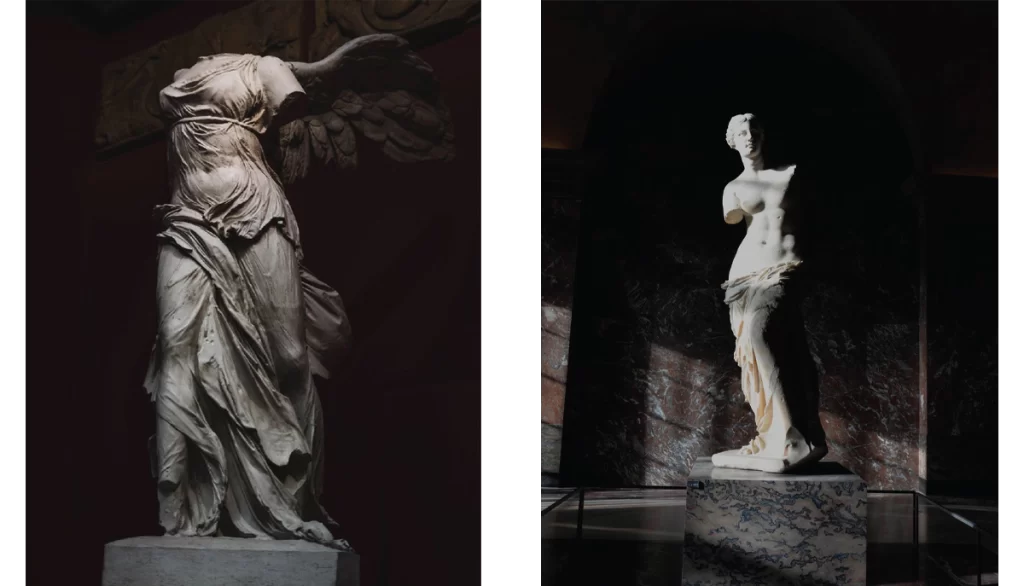
I leave Nike behind and move into another gallery. After wandering through room after room, almost overwhelmed by art, I suddenly find myself standing before the Venus de Milo. This armless depiction of Aphrodite has stood for centuries at the center of our ideas about beauty, desire, and the female body. Discovered on the island of Melos in 1820, it arrived at the Louvre in 1821. At one point, there was even discussion of reconstructing the missing arms, but the idea was abandoned in order not to alter the nature of the work. A female body endlessly interpreted, theorized about, admired for its grace…
People gather around her, studying the slight curve of her posture, the distant expression on her face. In that moment, I find myself thinking about our desire to look and to be looked at. About our obsession with defining beauty… Venus, meanwhile, simply stands there, in no hurry to be anywhere. I leave behind that strange sense of completeness within imperfection and descend the museum’s stone staircases, back into the cold of the city.
I like stepping out of a museum and returning to the street. One moment, you are deeply moved by a sculpture that people have been discussing for centuries; a few minutes later, someone is crushing a cigarette beneath their shoe, someone is shouting into a phone, someone else is carrying a baguette under their arm. Life immediately taps art on the shoulder and says, “All right, now turn back to me.” And I do.
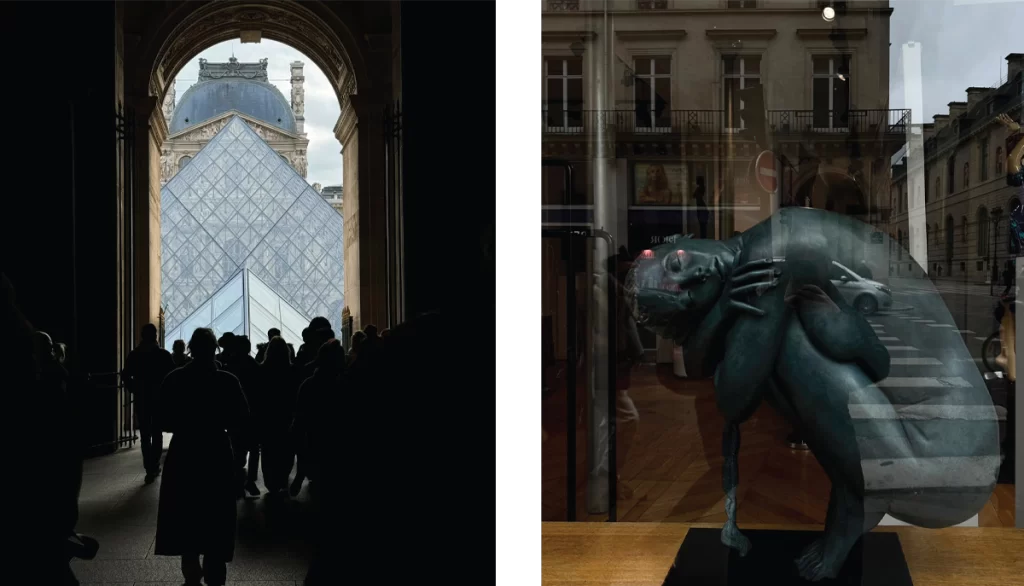
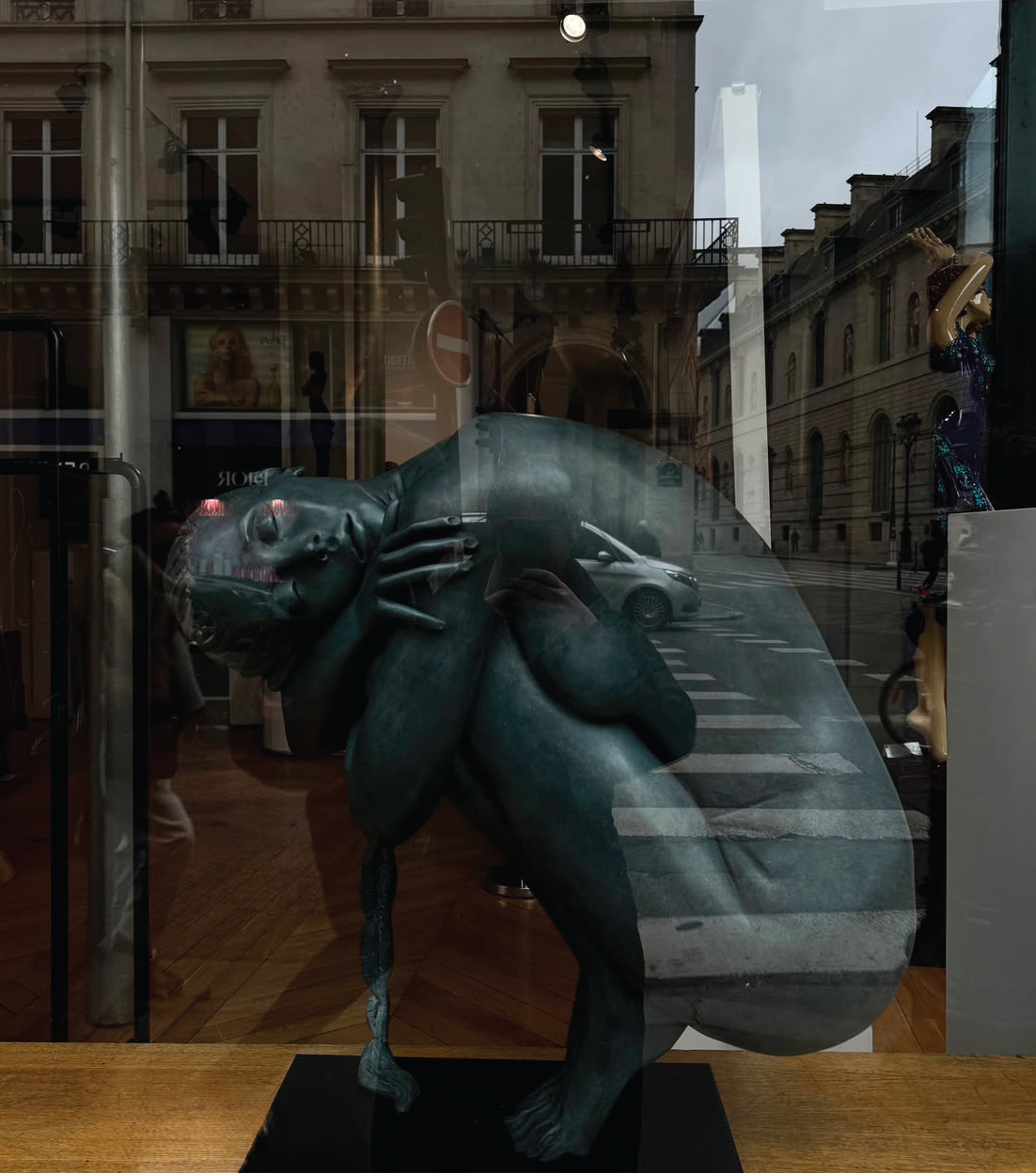
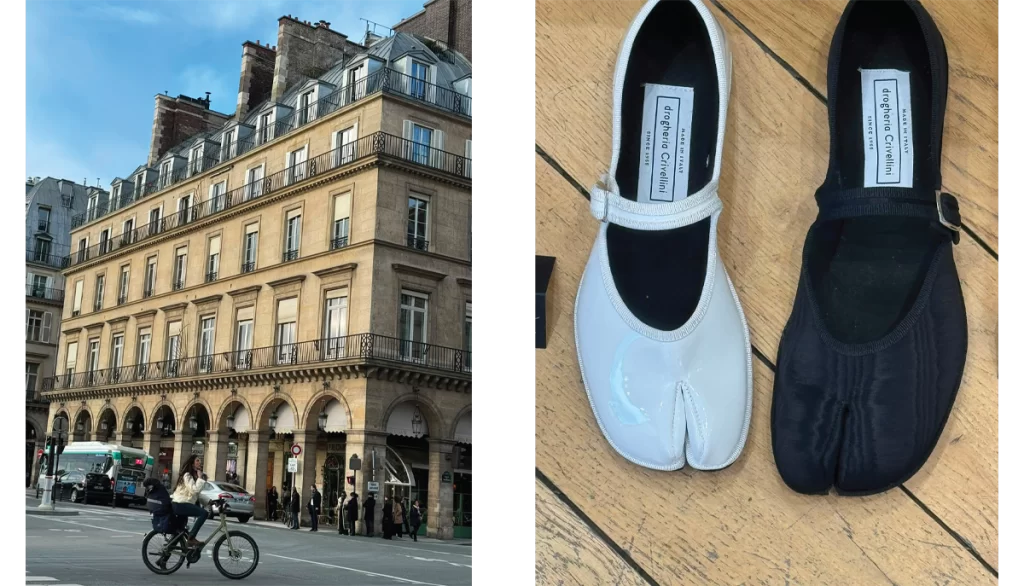
I linger a little longer than necessary in front of a display case containing a bronze figure. The form created by its body, curled inward upon itself, feels like an unwavering kind of resistance, something firmly rooted in place… I like it. Somewhere along the way, I buy a pastry whose name I cannot even pronounce properly, simply because it looks beautiful. A few streets later, I step into a small vintage shop. Old jackets, bags, shoes hanging from the racks… What I love about Paris is the way the old constantly reveals itself through the new. Sometimes, when I enter an apartment building or a small café, my eyes go straight to the floor. Old wooden floorboards, scratched and faded in places, giving a faint creak beneath each step…They are not perfect. There is something beautiful to me about the fact that the passage of time is not hidden.
Following the Seine, my steps eventually lead me to the Pont des Arts. This is the bridge once famous for the love locks that completely covered its railings, their combined weight becoming so great that the structure was pushed close to its limits. Today, the thousands of locks we remember from old photographs are no longer there. The first metal bridge on this site began construction in 1801, and the pedestrian bridge we see today stretches between the Louvre and the Institut de France.
Years later, when couples from all over the world began attaching locks engraved with their names, the bridge gradually took on an entirely different meaning. As the additional weight of the locks reached approximately 45 tonnes, the railings were replaced with glass panels in 2015.
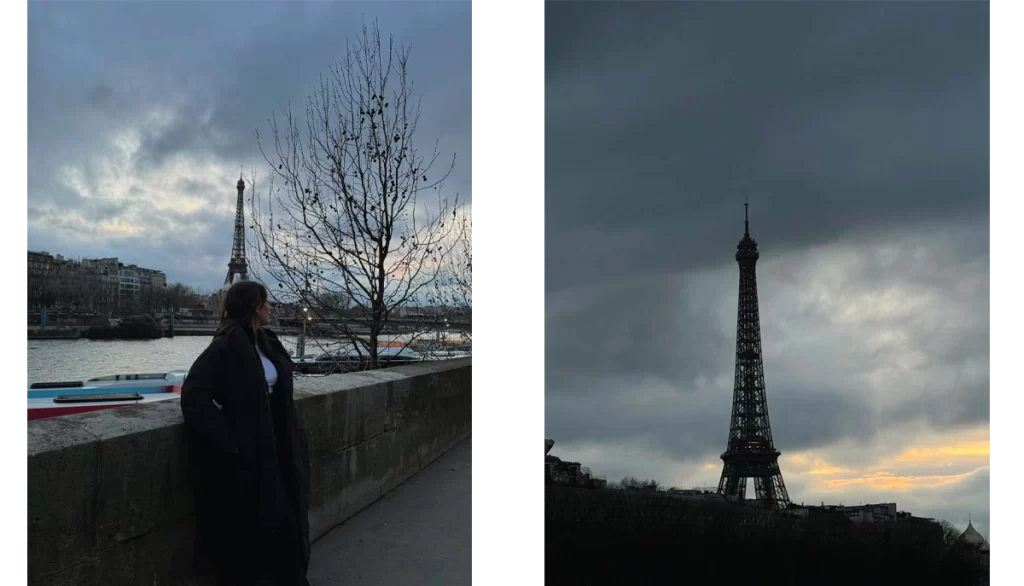
Why do we feel the need to make something we love permanent? Is it because we do not trust love itself, or because we cannot bear its impermanence and try to persuade it with an object? In a world now filled with people who are afraid of commitment, afraid of staying too long with the wrong person, afraid of losing their freedom, it feels strange to think that only a few years ago thousands of people left the idea of “forever” hanging over the river in the form of a tiny lock.
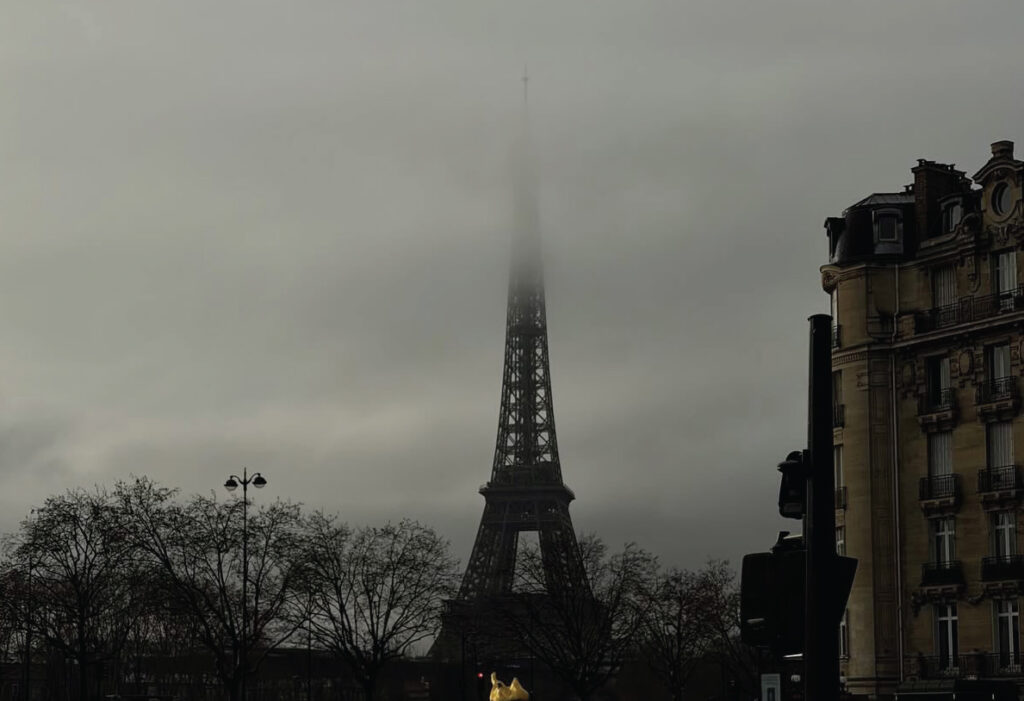
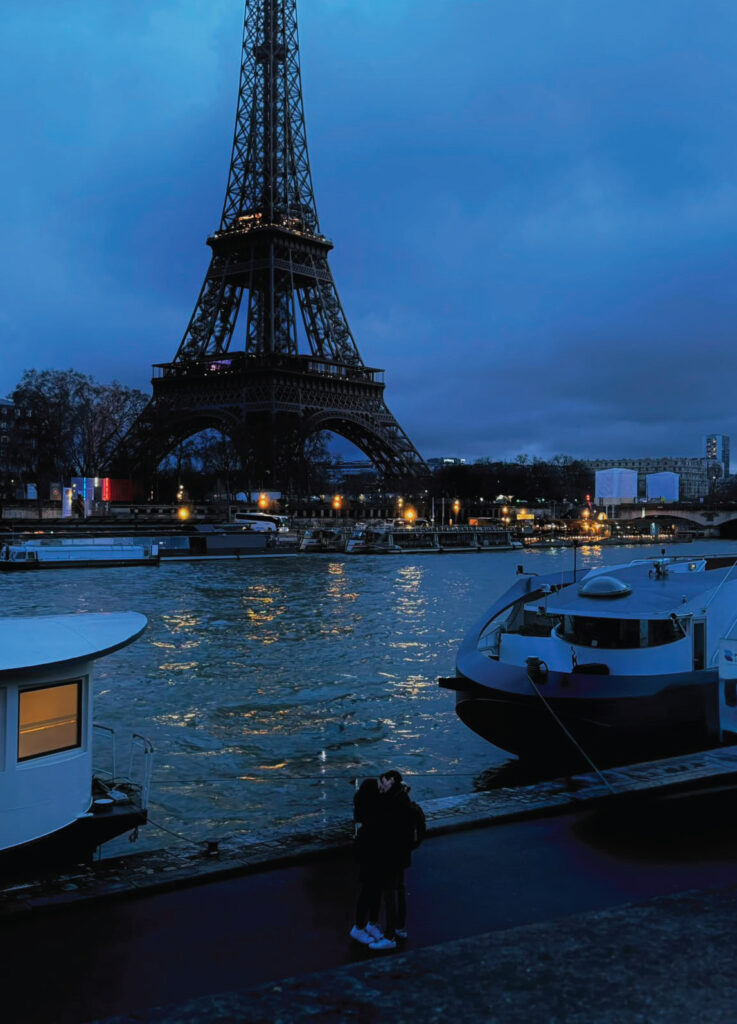
I keep walking. The air is still cold. A little farther ahead, I see a couple. They are standing by the Seine, kissing. The tower rises behind them, people passing by on either side… I take a few photographs from a distance. They do not notice me. I think to myself that I do not need a grander scene than this to understand why Paris is called the “city of love.” That sweeping, sometimes exhausting image suddenly becomes something as simple as two people leaning toward each other without posing for anyone.
The city itself is not doing anything to them. It is simply standing in the background. Perhaps that is part of Paris’s success. It gives people a beautiful setting without interfering with the way they look at one another. Standing there, I understand a little better why Paris feels so romantic to people — and even to me. I do not think there is a single reason for it. There is a way of seeing this city that has been accumulating for centuries. It has become layered with the stories of painters, writers, films, and people who found one another here and lost one another here…
Paris has stopped being merely a place and has become, in some sense, part of our shared imagination. Even when you come to this city alone, you never seem to walk entirely by yourself. It is as though everyone brings along their own film, their own past love, their own youth. Perhaps part of the freedom of travelling lies in this too. Not in becoming someone else, but in finding yourself, for a little while, in a place where all the old decisions you have made about who you are fall silent.
I put on my headphones and keep walking for miles. After a while, I stop checking the map so often.
“Getting lost” may be too dramatic a way to put it, but I like walking without knowing where I will end up. At the end of one street, there is a small café; on another, an old bookshop; then an apartment doorway with nothing remarkable about it at all.
I like things that have nothing remarkable about them. Here, I am simply someone walking. There is something strangely liberating about that anonymity.
At some stations, I pull my bag around to the front. Late at night on the train, I pay a little more attention to my surroundings. A few times, after choosing the wrong street and ending up somewhere far quieter than I expected, I turn down the volume in my headphones. Paris is beautiful, yes; but its beauty owes you nothing. Sometimes it is dirty, sometimes exhausting, and sometimes, when you are walking alone, unsafe enough to make you keep your instincts a little sharper.
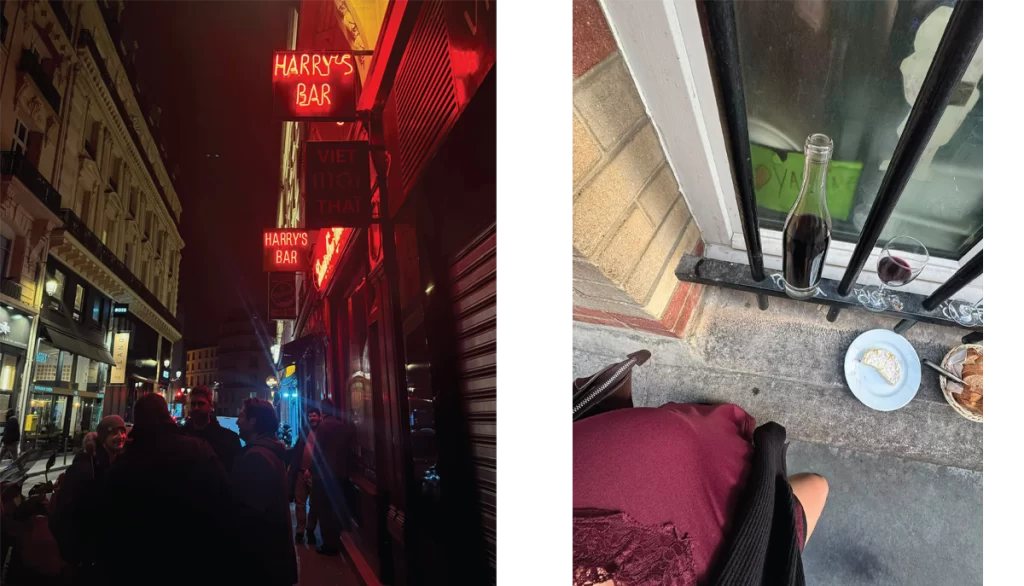
By late afternoon, though, I begin to like the city even more. I sit down at the edge of the pavement. In front of me is wine poured into a carafe. There is no special table, no view, no carefully arranged moment. And yet, for some reason, that scene stays with me. I pour the wine from the carafe and enjoy drinking it there on the pavement. People pass in front of us; all around, groups are speaking French, laughing, exchanging glances, raising glasses, surrounded by cigarette smoke.
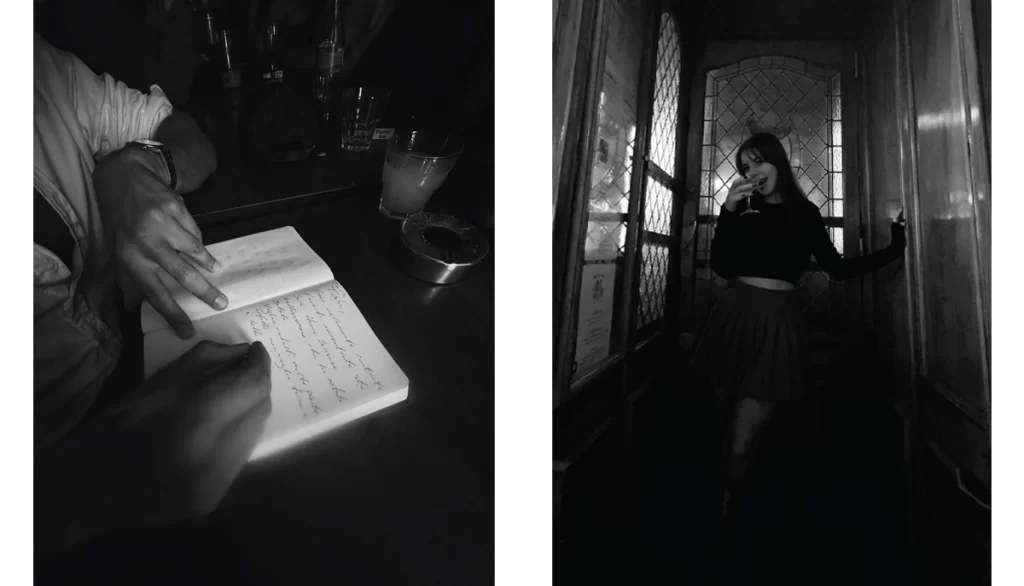
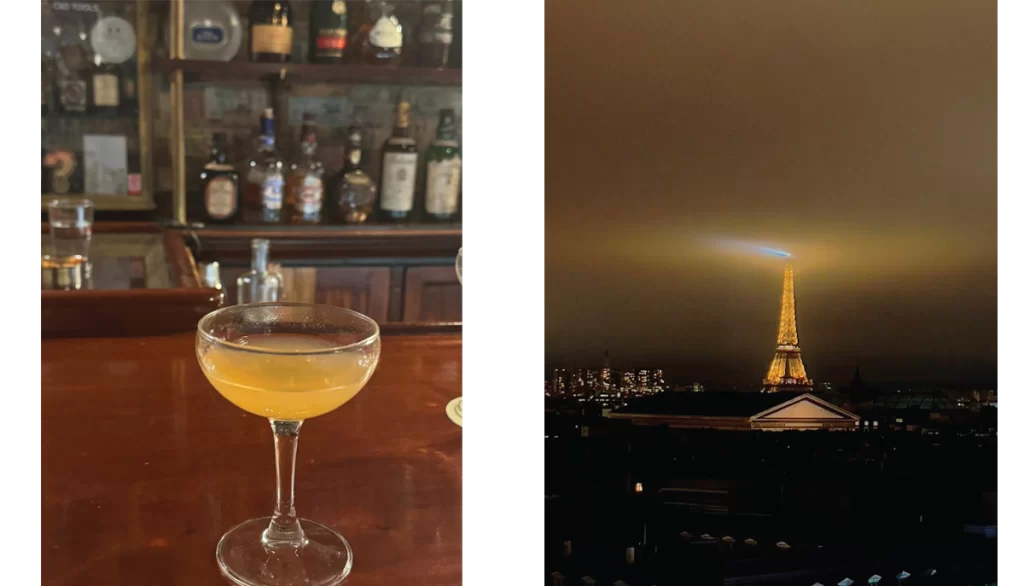
Paris reveals itself most clearly in the moments when it is trying the least to be Paris. Later, we go to a jazz bar in the city centre. It is dark inside, the tables set close together. Conversations disappear beneath the music. After a while, you forget what time it is. Everyone here seems to be drinking Pastis, a strong French spirit scented with anise. It may not quite compare to our rakı, but I have a glass or two. My body, after walking for kilometres all day, is completely exhausted. But going home is the last thing I want to do.
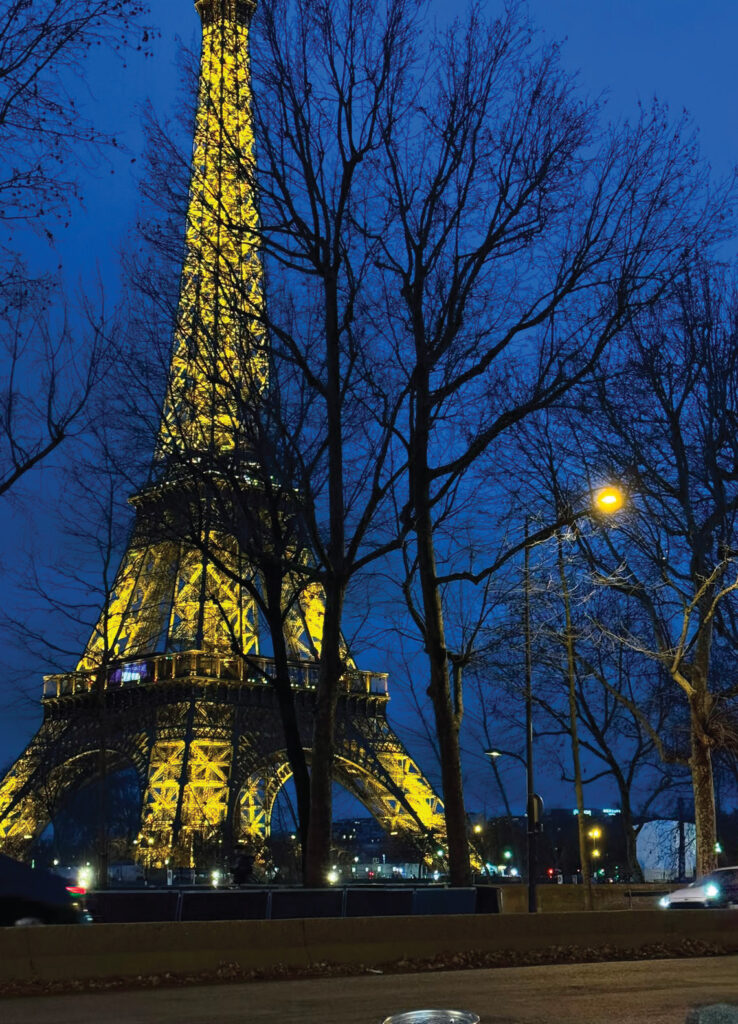
On the way home, the lights of the boats shimmer and break across the Seine, cars leave red streaks on the wet asphalt, and the yellow glow of the street lamps softens the stone façades of the buildings. The city that moves so quickly through the crowds by day seems to slow down around the water at night.
Calling Paris the “City of Light” may sound like a tourist slogan today, but the city’s relationship with the night runs much deeper. In 1667, during the reign of Louis XIV, a systematic form of public lighting was introduced across much of Paris, and over the centuries gas and electricity continued to transform the way the city looked after dark. In a sense, Paris has been designing its darkness for a very long time. I think of Midnight in Paris, and of Gil’s desire to escape into another era when the bells strike midnight. Some parts of the city almost force you to remember that feeling. If you have seen the film, it is impossible not to think of it. 🙂
Rain-soaked pavements, yellow lights, streets that seem slightly untouched by time… It feels as though the 1920s might actually appear around the next corner. You cannot help wondering whether everything might have been more beautiful if you had lived in another era. I start thinking about which period I would most want to live in… The 1920s, among Hemingway’s generation? Or the 1960s, with Godard’s cinema spilling out into the streets? And what about you?
A huge smile spreads across my face. Maybe what I am smiling at is not the idea of going back to that time at all, but a feeling. Maybe I am even longing for an emotion I have never actually lived. Do we truly miss the past, or do we simply write a more beautiful story for it in order to escape the difficulties of the present? It is strange how easily we romanticise years we never lived through, isn’t it? Perhaps we all long for another period of our lives not because we truly wish to live there, but because we imagine a different version of ourselves within it.
Who knows… Paris is a city that feeds that kind of fantasy. Of that, I am certain.
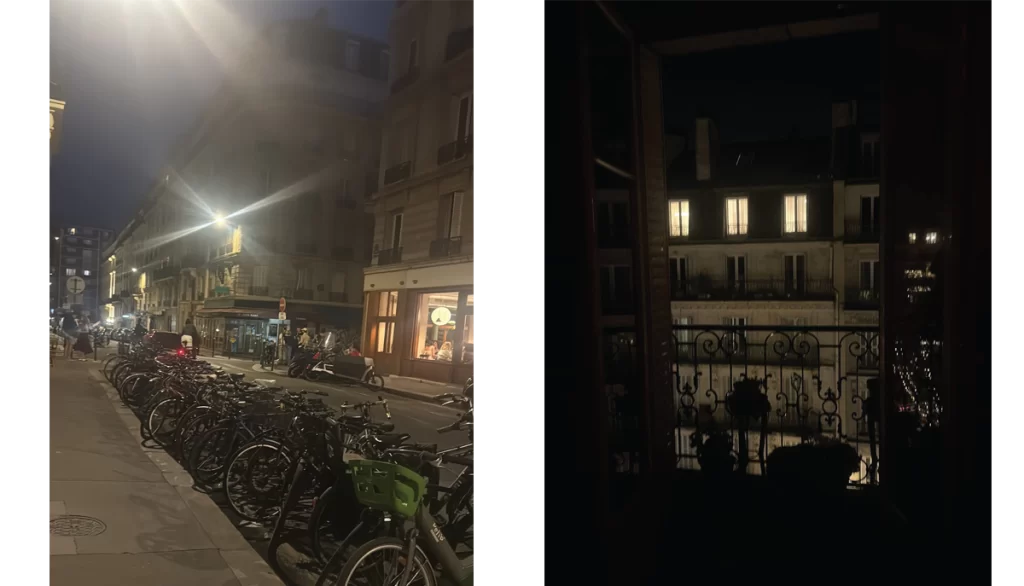
As the night draws to a close, step by step, the time to leave Paris begins to approach… Romantic, but never obedient. Beautiful, but far from perfect. On one corner, it can be elegant enough to carry you back decades; a few streets later, it can scatter cigarette smoke, car horns, and a little chaos over all that romance. One side of the city never hesitates to show itself, while the other seems to care very little about what anyone thinks. I think that was the part that felt familiar to me, and perhaps the reason I ended up loving it more than Rome.
Because I have always liked the idea of very different things existing inside me at the same time. Falling too deeply for beautiful things and then growing tired of them. Losing myself alone in crowded places, yet forming a real connection with only one person and becoming completely withdrawn from everyone else. Spending one night thinking for hours, and another drinking wine on the pavement, taking nothing seriously at all… A little romantic, a little rebellious. A little attached to the past, and a little unwilling to belong anywhere.
I came here expecting to see a city. But as I leave, I find myself wondering why, in some cities, I feel more like myself than I do in others. Paris, thank you. Not for making me feel like someone else. Quite the opposite. For making me feel a little more like myself.