



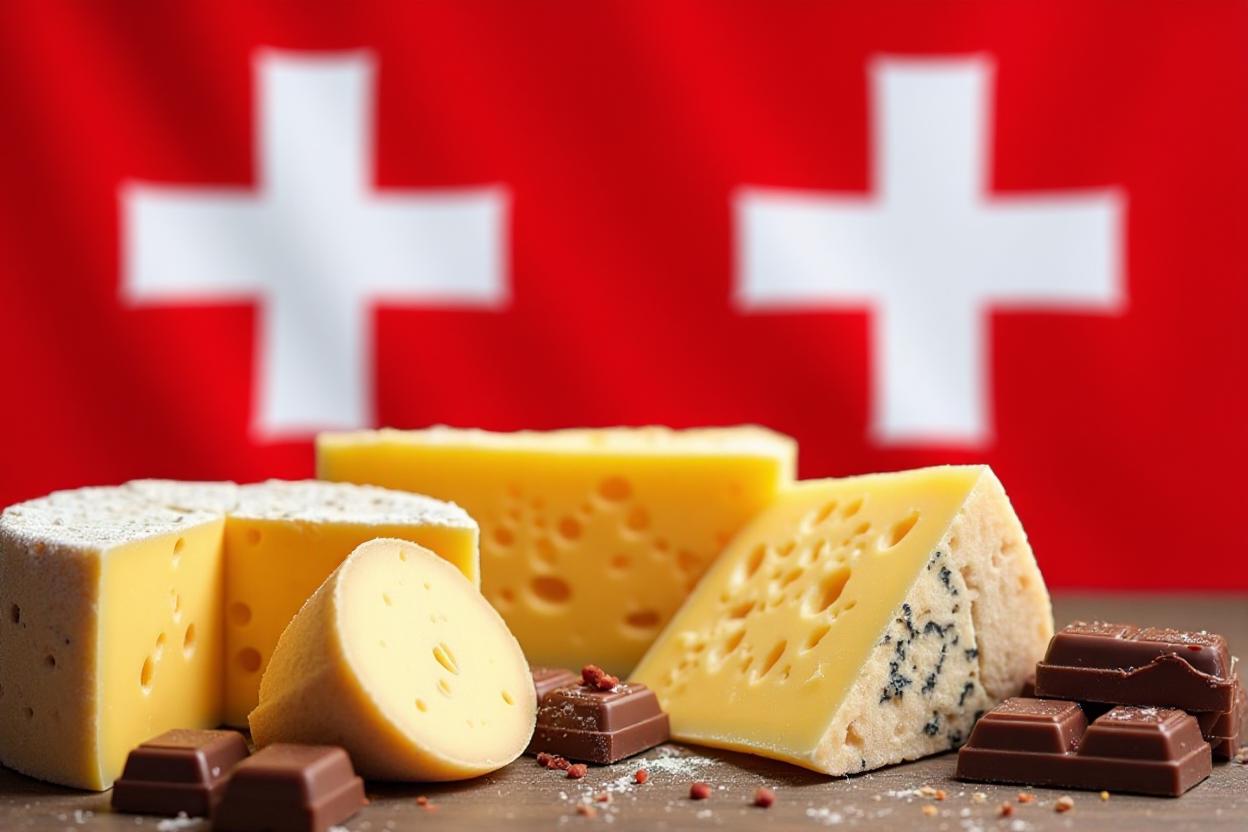
Switzerland; the country I have lived in for many years, where I spent all my educational years, is like a postcard—almost as if it has stepped out of a fairytale—and it is also the kingdom of chocolate and cheese. Gruyère, Emmental, Tilsiter, Appenzeller… these cheeses, some with fat content reaching up to 55%, leave us wondering: friend or foe?
In this country where the elderly population is significant and longevity is accompanied by good health, cheese is the most indispensable nutritional source. Considering that Switzerland ranks among the countries with the lowest obesity rates and minimal cardiovascular issues, a question naturally arises: should we fear cheese?
These cheeses, which for years we feared for being “too fatty,” are in fact a major source of protein. Produced with care and in the same traditional way for centuries from the milk of well-fed cows that roam freely in alpine meadows, these cheeses are truly a reservoir of health.
If people over 80 can climb to altitudes of 2000 meters, if obesity is virtually nonexistent, if their memories are intact—then by all means, let us all gather around the fondue pot or indulge in raclette! And as part of the sweet tradition of Gruyères, how about vermicelles made from chestnut purée, topped with double Gruyère cream, raspberries, and a mini chocolate cup filled with Gruyère milk to accompany your coffee? What more could one wish for?
The essence of it all lies in this: clean oxygen, vitamin D (from butter), butter, cheese, and milk that are free of foreign additives—and from that milk, chocolate. In such a system, arteries do not clog, and obesity is nearly non-existent. Of course, it should also be noted that a Swiss person never skips a meal. That table will be sat at three times a day without fail!
A true story unfolded like this years ago: Upon detecting suspicious activity in Swiss airspace, the air force was ordered to intervene. The response was quite remarkable: “We are currently at lunch; we’ll handle it afterward.” Oh my, oh my! So what is it that makes all these nutrient-dense foods—sausages, salamis, wines, desserts—so enjoyable yet not fattening?
Eating meals at regular times (note: no good restaurant stays open after 2 PM until dinner service at 7 PM), consuming freshly and seasonally cooked dishes, doing your own chores, staying active, taking long walks, skiing, sailing in lakes, mountain climbing, and always engaging in outdoor activities. Gyms and fitness centers are not part of a deeply rooted lifestyle here; they’re new trends and not nearly as glamorous as in Turkey.
So, dear friends, in short: the closer we are to nature, the healthier we become. Making peace with all living beings and uniting with them in respect will elevate our quality of life. If we invest in our soul, both our inner world and outward appearance will shine.
“Polluted surroundings taint the soul; tainted souls pollute the surroundings.” Hz.Mevlana
Now, let me also tell you about Gruyères, the medieval village, its castle, and the place where the cheese considered the king of all cheeses is made. And of course, about the Cailler chocolates that are produced in the same region.
The earliest records of Gruyère date back to 1115, to medieval times when dairy farmers began making cheese as a way to preserve milk for times of scarcity. It gets its name from the town of Gruyères in the Swiss Alps, near the French border, where it first appeared. The beautiful mountains and valleys surrounding the town are where the cows roam and graze; the clean air, sweet herbs, and lush pastures make the milk exceptionally high-quality, which in turn gives the cheese its incredible flavor.
Cailler is a distinguished Swiss chocolate brand and manufacturing house, headquartered in the quaint town of Broc. Its origins trace back to 1819, when François-Louis Cailler laid its foundations in Vevey, making it one of Switzerland’s oldest chocolate producers. For much of its early history, Cailler remained proudly independent, until the early 20th century saw it form alliances with fellow confectioners. A landmark moment came in 1898, when the company inaugurated its principal factory in Broc — a site that continues to embody the legacy of Swiss chocolate craftsmanship.