



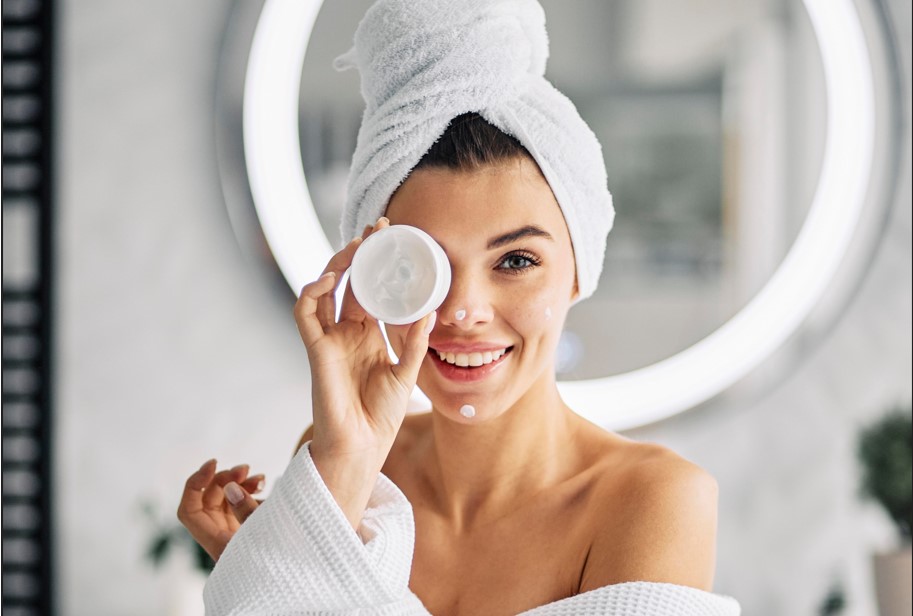
When you’re in your late 20s, your skin cells regenerate every 28 days to produce new and smooth skin. However, by the time you get to your mid-30s, this process slows down and regeneration occurs every 50-70 days. As a result, your skin may look dull, and dry, and wrinkles become more prominent. At this stage, Retinol can be used to accelerate cell regeneration and make the skin look better. Retinol is an anti-aging compound. When applied topically, it helps reduce wrinkles, treat hyperpigmentation, and reduce general signs of skin aging.
Retinol is also used to treat acne and acne scarring. Most anti-acne creams and gels have retinol as the active ingredient. The biggest reason why retinol is so effective on the skin is that it changes the way the cells in the dermis and epidermis function. It also increases collagen production in the skin, which is ideal for preventing aging.
What Does Retinol Do for the Skin?
- Minimizes deep wrinkles,
- Lightens boring pores and skin by creating a peeling effect, revealing brighter and smoother skin,
- Regulates the oil level of the skin and is useful for oil stability,
- Helps alleviate age spots, sunspots, and hyperpigmentation,
- Provides a bright appearance to the skin,
- Reduces the porous appearance in the long term.
What Should Be Considered When Using Retinol?
You can include retinol products that have low percentage formulas in the size of peas in your skincare routine. For beginners or anyone with ultra-sensitive skin, the minimum dose is 0.25%. When you use the product for the first time, you need to wait 4 days to check the skin reaction. If no side effects such as redness, irritation, or dryness have occurred, you can apply retinol every 3-4 days in your routine every night for the first 2-3 weeks. Once your skin adapts to it, you can start using the product every night.
NOTE; You can follow 3-month periods for retinol use. After 3 months of use, you can give a gap for 3 months so that your skin gets used to the regeneration process. If you experience side effects due to the use of retinol such as excessive shedding and burning, you should stop using retinol. Such side effects can be dangerous for your skin.
WHY SHOULD RETINOL BE USED AT NIGHT?
Since sensitivity and redness will occur on our skin during the use of retinol, UV rays from the Sun can make your skin even more sensitive. For this reason, using it at night will produce healthier and more gratifying results both to protect your skin from such a risky situation and because your skin undergoes a natural repair and regeneration process during the night hours.
PLEASE DO NOT APPLY STRONG VITAMINS SUCH AS RETINOL TO YOUR SKIN AS YOU SEE ON THE SOCIAL MEDIA. BE SURE TO ADD IT TO YOUR SKINCARE ROUTINES IN A CONTROLLED MANNER BY A DERMATOLOGIST OR PROFESSIONALS IN THIS FIELD. LOVE YOUR SKIN AND TAKE CARE OF IT:)