



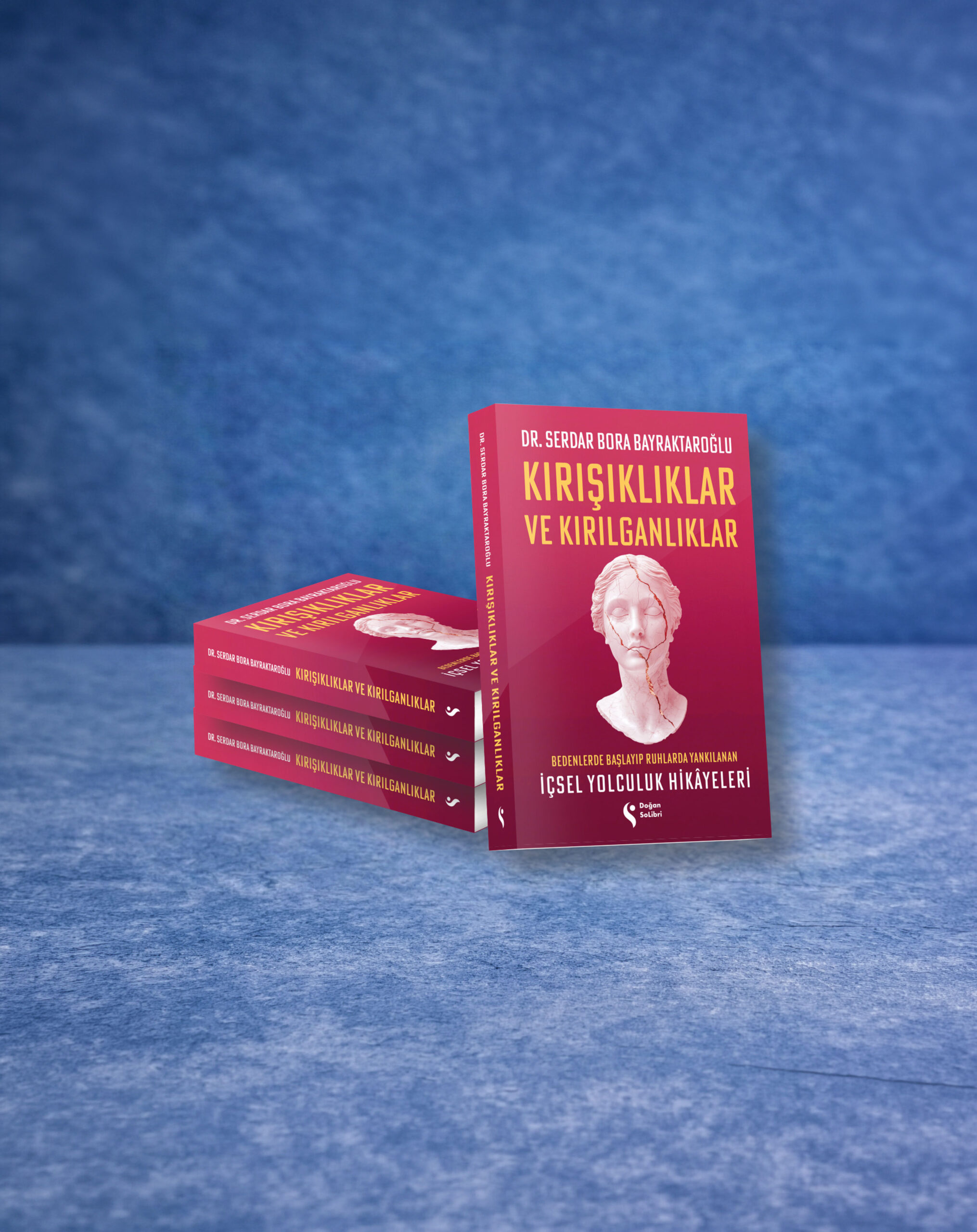
Beauty is often described as “looking younger.” And yet, as the years pass, we understand that what we’re truly seeking may not be only smoother skin, but a lighter inner world, a calmer mind, a more reconciled gaze. The face we see each time we look into the mirror is like a silent record of what we’ve lived through: what we’ve swallowed, what we’ve celebrated, what we’ve lost, and how we’ve gathered ourselves again. A wrinkle is not only the mark of age; it is also the trace of memory. Vulnerability, meanwhile, is often the story hidden right beneath that trace.
While writing “Wrinkles and Vulnerability,” my intention was to make visible the part of aesthetic journeys that cannot be contained in “before/after” photographs. We witness, again and again, how the sentences spoken in the examination room, the silences that fall in between, and the feelings that gather at the corner of the eye but go unnamed can sometimes turn into a confrontation more than an intervention. Because when a person speaks with their body, they are often speaking with their heart. Behind a request for change there can be a weight from the past, a belief about the self, and sometimes a long-postponed desire to begin again.
The reason I wanted to share this piece in VOX Aesthetic is exactly this: to talk about aesthetics not only as a correction performed from the outside in, but as a possibility of transformation rising from the inside out. The measure of science and the precision of technique are indispensable, of course, but a person’s story is at least as real as anatomy. The introductory text below is the first threshold that opens the door to the book. I hope every reader finds, between the lines, a place for their own wrinkles and vulnerabilities; and perhaps most importantly, moves a little closer to their “real” self.
On Wrinkles and Vulnerability
An Introduction
There are faces that look as if they have sealed the witness of an entire life into their skin. On those faces, time is not merely a number; it is the marks left by pain, joy, silences, and prayers.
The scalpel of aesthetic surgery is often held to erase those marks. But time doesn’t leave only wrinkles; it leaves fragilities too.
In my own small way, I realized that I was holding that scalpel not only to rejuvenate the body, but also to reveal the story of the soul. And of course, it took me a long time to realize this. Because when you touch a person’s body, learning to also touch their soul takes time. I’ve been a plastic surgeon for nearly twenty years. Yes. But I’m also a traveler: like everyone, I see the visible; my science, my philosophy, my ruler, my scalpel arrange what belongs to the visible. But can “trying to touch the invisible” be an adventure a surgeon like me can take on – could I also be a traveler of dreams?
A traveler who doesn’t remain trapped within the walls of the profession – like Rumi’s compass metaphor, one foot fixed on the ground, the other roaming through worlds.
I don’t know the answer either, but the stories that pass through me are born from precisely those journeys.
I’ve noticed that some people come to me not because they are unfamiliar with what they see in the mirror, but because they have become strangers to what they feel. One carries an old sadness in the droop of their eyelids; another carries a childhood shame in the shape of their nose. Someone wants to change their smile; someone, their gaze. Yet they don’t realize that what they want to change is the inner voice that has been silent for years. Every stitch, every touch – sometimes the outward reflection of an inner reckoning.
My words may not sound scientific to you; but I want you to know this: the soul, too, has an anatomy. The heart doesn’t only pump blood – it also carries memory. The eye doesn’t only see – it also hides pain.
The saying “You cannot mend the face without healing the soul” is attributed to Epictetus. The stories you will read in this book tell of the inner transformations behind aesthetic journeys. Each is a story of selves squeezed between who they wish to appear to be and where they truly are – and of finding their way.
In some stories, tears are hidden; in others, a smile. But they all share one thing: being human. There isn’t as much difference as you might think between rejuvenating a wrinkled face and repairing a broken heart.
This book is not only nine stories, but nine journeys – a passage from surface to inside, from the visible to the essence. I can say they were fascinating adventures for me, too. I hope that as every reader remembers their own wrinkles and vulnerabilities, they also meet their “real” self a little more closely.