


My Breasts Have Sagged – Now What?
Breast Aesthetics: In Pursuit of a Lifted, Full, and Natural Form
The female breast – one of the oldest symbols of fertility, feminine energy, and allure. It is also a symbol of motherhood, nourishment, and the first point of contact with life: breast milk, the first “meal” we taste when we arrive in the world. From mythology to the cultural memory of Anatolian civilizations, the breast has been associated with abundance, plenty, and productivity – a powerful emblem carried through human history.
It’s not surprising that an organ we load with so much meaning hasn’t lost its importance in the modern world. Because the “instinctive” side of the human being doesn’t change easily: a healthy-looking, youthful, full breast form has found a strong echo in aesthetic perception for centuries. Trends in breast aesthetics may change from era to era, but the goal often converges on the same place: a livelier, more balanced, more youthful breast silhouette.
Why Is It So Popular?
Breast procedures are among the most commonly performed aesthetic interventions worldwide. Thanks to advances in technology, surgical technique, and recovery comfort, the process has become more predictable for many patients. With the right patient selection and the right planning, returning to daily life is often possible in a shorter time (though recovery always varies from person to person).
As a surgeon who has performed hundreds of breast operations, I can say this clearly: a positive change in breast form can create a noticeable effect in many women not only physically, but also in confidence, well-being, and social comfort. That, in turn, reminds us again of the breast’s place in psychological and social perception.
What Are the Main Breast Procedures?
In breast aesthetics, three main categories stand out:
- Breast lift (mastopexy)
- Breast augmentation (with implants or methods such as fat grafting, depending on the case)
- Breast reduction (reduction mammoplasty)
In this article, let’s focus specifically on the breast lift.
What Is Breast Sagging?
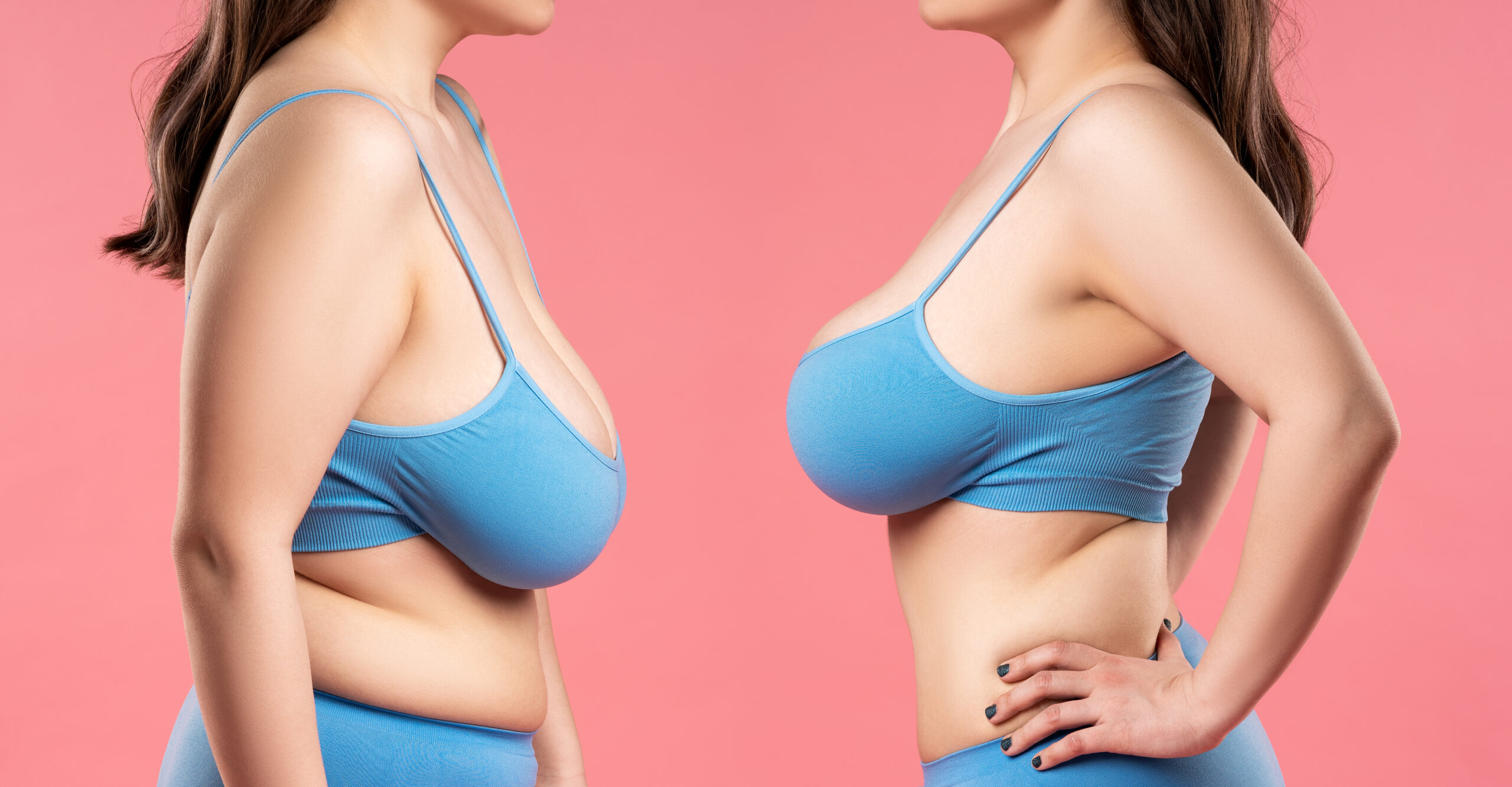
Breast sagging (ptosis) is, in its simplest definition, when the nipple approaches the inframammary fold (the crease under the breast) or descends below that line. Sagging is sometimes accompanied by “volume loss” – meaning the breast doesn’t only sit lower, it may also look as if it has emptied out.
Why Do Breasts Sag – Why Does the Volume “Deflate”?
There isn’t a single cause; usually several factors work together:
After pregnancy and breastfeeding: After breastfeeding ends, the breast tissue may shrink, volume can decrease, and skin laxity may develop – making the change in shape more noticeable.
Frequent weight gain and loss: Breast tissue enlarges and shrinks with weight changes. These ups and downs can loosen the skin, and sagging may increase over time.
Aging and gravity: Over the years, skin elasticity decreases; with gravity, breast tissue drifts downward. In thinner, more elastic skin types, the process can be more visible.
Genetic and structural factors: For some, sagging begins at a younger age. Certain congenital breast-shape differences can also lead to early changes in form.
Breast Lift: What’s the Aim?
The goal of a breast lift is to restore a breast that looks more shaped, positioned higher, and feels more youthful in appearance. Often, the procedure also involves:
- Moving the nipple and areola (the pigmented area) to a more ideal position
- Reshaping the breast tissue
- Balancing asymmetry between the two breasts, if present
An important note: a breast lift on its own is not a “breast enlargement” or “breast reduction” surgery – but it can be combined with those procedures when needed.
Who Might Be a Good Candidate?
Examination is the foundation of everything; the final decision is always made with an individualized assessment. In general, a breast lift may be considered when:
- The nipple points downward or has shifted downward
- The breast tissue looks deflated or has lost its form
- The skin is loose and has a slack, “wilted” look
- There is a clear difference in volume or sagging between the two breasts
- You feel uncomfortable with the current shape and want a more “gathered” silhouette
Lift Alone, or Combined?
The need for lifting can be the main issue – but in some patients, sagging is accompanied by concerns about volume as well.
- If sagging is the main problem: Mastopexy (lift)
- If sagging plus low volume: Lift plus augmentation (implant or other options in suitable patients)
- If sagging plus excess volume/weight: Lift plus reduction
In short, “the right plan” is determined not only by size, but by tissue quality, skin condition, nipple position, and the silhouette you’re aiming for.
A Brief Clinical Scenario
Imagine a patient in her late 40s who has given birth and, after breastfeeding and repeated weight changes, has developed noticeable sagging. What she often wants is this: “I don’t want my size to change much, but I want them to look higher and more shaped.”
In such a case, the breast tissue is reshaped during surgery, the nipple is moved to a more ideal point, the areola diameter is adjusted if needed, and the breast is restored to a more conical, youthful form. The aim is not to create “a different breast,” but to achieve a livelier shape that remains harmonious with the patient’s body.
What If You’re Planning Pregnancy?
This is one of the most common questions. I generally guide patients like this:
- If you’re planning pregnancy in the near term (within 1-2 years): it may be more sensible to postpone the lift until after pregnancy and breastfeeding.
- If pregnancy is a more distant plan (for example 5 years or more): in suitable patients, a lift can be performed at the desired time.
Pregnancy and breastfeeding can create new changes in the breast. It isn’t possible to predict the degree of those changes with certainty in advance.
Will It Sag Again?
After a breast lift, a mild degree of “drape” can appear over time – this is natural. However, with the right technique and planning, the breast usually does not return exactly to its previous state. Still:
- Aging continues
- Gravity continues to act
- Rapid weight gain and loss can negatively affect results
If a new deformity develops after pregnancy/breastfeeding, some patients require no further intervention, while others may benefit from a small revision or additional procedures – entirely depending on the individual case.
Breastfeeding: after a lift, breastfeeding is possible for many patients, but this depends on the technique and tissue structure; it should not be presented as a guarantee.
Scars and Techniques
A breast lift is not a scarless surgery. However, incisions are planned as much as possible along natural transition lines, and their visibility tends to fade over time. Depending on the degree of sagging and the breast structure, incision options can include:
- Around the areola only (periareolar)
- Around the areola plus a vertical scar (“lollipop”)
- Around the areola plus a vertical scar plus an inframammary fold incision (inverted-T / inverted-J)
The technique is chosen according to the level of sagging, breast volume, excess skin, and the desired shape.
At What Ages Is It Done – How Long Does It Last?
A breast lift is most often performed in patients whose sagging is related to pregnancy, weight changes, or aging. Structural reasons can create a need at younger ages as well; in those cases, timing should be evaluated by the physician with attention to development and the person’s physical and psychological readiness.
The effect often lasts for years, though small changes can occur over time due to aging and lifestyle factors.
Final Note
When performed for the right indication, a breast lift is a powerful operation that can noticeably improve body perception and silhouette balance. The most critical step is always the same: individualized analysis, the right technique, and realistic expectations. Because in aesthetics there is no single “one true” answer; what is right is defined anew for every patient.